Gluten-free, Potato-free, Healthy Polenta Chips

The change in temperature has given me an opportunity to cook some robust warming food that I’ve had in my mind during hot summer. Yes, making casseroles, stews and soups and baking! That’s why my oven has been so busy every day.

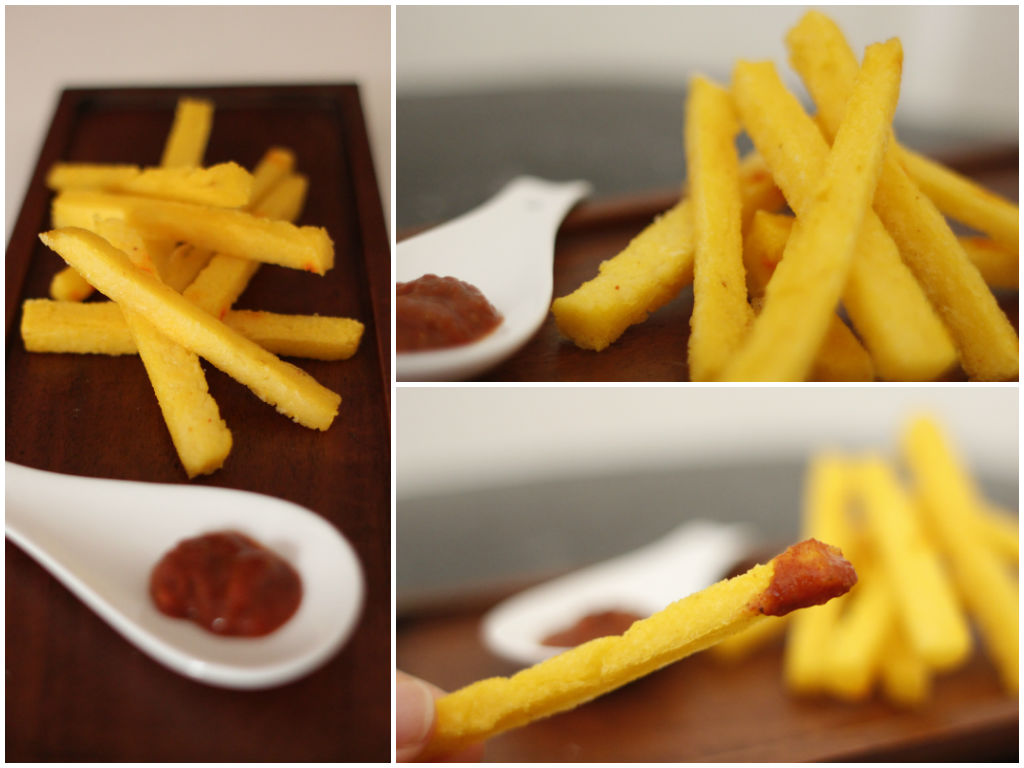
Polenta is grounded corn meal – both gluten-free and wheat-free. It is rich in carbohydrates and insoluble fibre, low GI (stabilising your blood sugar level) and contains a good range of vitamins and minerals. It is so versatile to use. When you cook in a pot and serve immediately, it is like mashed potatoes, a creamy base for stew or casserole. Then it transforms to a hard block when it’s set in the fridge. You can cut into little cubes, pan-fry and add into your salad, just like croutons. You can also cut into squares or rounds, add your favorite toppings and make gluten-free crostini. Or you can cut into strips and make this healthy oven-baked polenta chips.

How to cook? I add a cup of polenta in a sauce pan and pour 4 cups of water. Turn on the heat, bring it up to a boil, simmer over low heat for 20-30 minutes. You need to keep stirring making sure there is no lumps, and add a bit of more water if the mixture is too thick. Don’t forget to season or add some flavours such as using stock or milk instead of water, adding grated Parmesan cheese and adding in some herbs.

It is actually not as hard as it sounds. You just need to get the consistency and seasoning right. Once it is cooled down and set in the fridge, take it out and cut into little strips. Season and spray some oil. Bake in the oven for 20-30 minutes, flipping half-way through. It should be golden brown outside and fluffy inside. As the baking process drives moisture from the polenta, the flavour will be more concentrated and corn-y.

It is a healthy alternative to normal deep fried potato chips at your dinner table. Also a great afternoon snack when you feel like something but not quite dinner yet. Or serve as a savoury nibble when your guests arrive at the dinner party? Serve with herb-y salt like rosemary or sage, tomato-chili sauce, chive-cottage dip, or sun-dried tomato humus.
Polenta Chips

Roasted Cabbage Salad

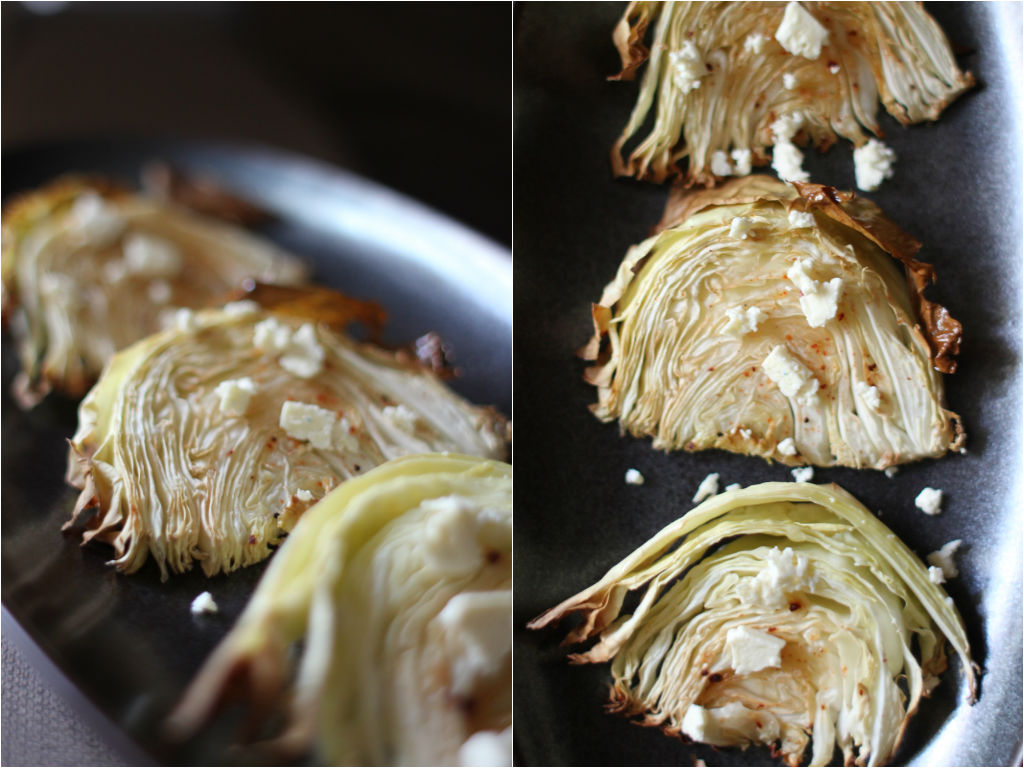
How can something simple like this be so tasty? I’m talking about a cabbage roasted in the oven with a drizzle of oil and salt and pepper. Crispy, caramelised, smokey flavour on the edges of the cabbage and in contrast, buttery and sweet inside. It is not only inexpensive and super simple to make but also does all good things to your body.

Cabbage is a powerful antioxidant and an abundant source of vitamin C (actually richer than oranges) and vitamin K (good for your bone health). It also contains a good amount of minerals like potassium important for controlling heart rate and blood pressure, manganese, iron, and magnesium. Cabbage has a number of anti-cancer compounds, like lupeol, sinigrin, and sulforaphane, which are known to inhibit the growth of tumors. It is often used as a treatment for constipation, stomach ulcers, headaches, obesity, skin disorders, eczema, jaundice, scurvy, rheumatism, arthritis, gout, eye disorders, heart diseases, aging, and Alzheimer’s disease.
Roasted CabbageIngredients

1/2 cabbage
1/2 lemon
1/2 tsp of smoked paprika
1 tbsp coconut oil
salt and pepper to taste
1 tbsp of olive oil
crumbled feta for garnish

Place wedged on a baking sheet. Toss with coconut oil, smoked paprika and season with salt and pepper. Roast in the preheated oven (200) for 30-40 minutes until the edges of the cabbage is golden brown. Remove from the oven and transfer to a serving plate. Squeeze a lemon over the salad. Sprinkle crumbled feta and drizzle olive oil for garnish.

GF Lupin Savoury Muffins

When I went to one of my favorite local health food shops today, I came across lupin flour. Have you heard of it? I’ve seen lupin beans at Kakulas brothers, but not the flour. I couldn’t resist myself taking some home for a little gluten free baking experiment.

Lupin or Lupini beans are yellow legume seeds of the lupinus genus plant, a common food of the Mediterranean basin and Latin America. Flour from the lupini bean has many health benefits such as high dietary fiber, high protein, no starch, non-GMO, and a low glycemic index. It helps manage hunger throughout the day as well as provides higher brain function. It is also naturally gluten-free. Yay!

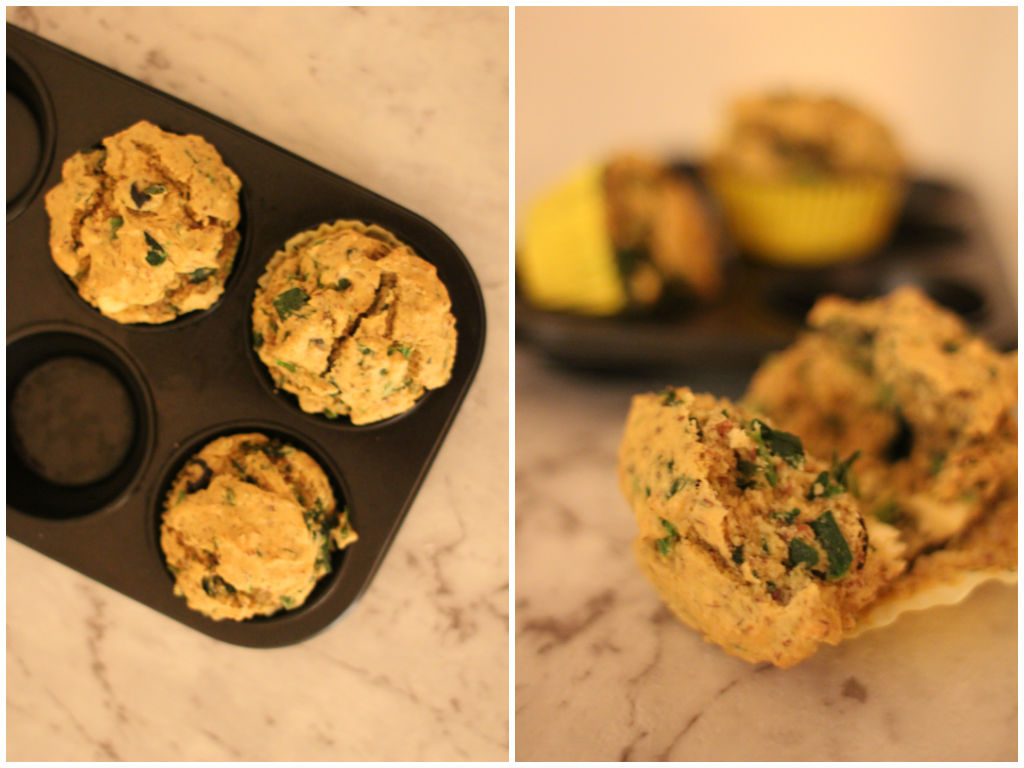
The problem with gluten-free baking is that it can have a weird texture, or the hint of a strange flavour. It is best to swap half of the flour in your favorite bread or cookie recipe with lupin flour. It is on the salty savoury side so skip adding any additional salt. And it has a texture closer to cornmeal so extra moisture is also helpful. I wanted to bake something savoury using lupin flour today. Spinach, feta cheese, black olives and thyme sounds good to me! These muffins are packed with protein – great for breakfast! I only made three for experiment, but feel free to double up the recipe and make 6 muffins.
Lupin muffinsIngredients

50g lupin flour
50g buckwheat flour
20g flaxseed meal
1 tsp baking powder
1/2 tsp baking soda
1/2 tsp cayenne pepper
30g feta cheese, crumbled
10 black pitted olives, chopped
1/2 cup of baby spinach, chopped
1 tsp thyme
2 large eggs
40ml of olive oil
a pinch of salt

Lightly beat eggs and olive oil in a large bowl. Add all dry ingredients in and stir to combine. Add crumbled feta, chopped olives and spinach, and thyme into the mixture and stir until combined. Spoon the mixture into a muffin tins and bake in the preheated oven (180) for 20-25 minutes until cooked.

GF Rhubarb Pie

rhubarbIt is a rhubarb season! These glossy, crisp and rose-red stalks are amazing. It is quite tart and tangy, but cooking or baking makes it beautifully sweet and sour, perfect for a dessert. Rhubarb technically is a vegetable, but more often it is compared in the fruit family. It was mainly used for medicinal purposes back in 2700 BC from China. It has many anti-oxidant benefits, helps your digestion and mostly will help with allergies like coeliac, gluten or dairy intolerance, lung irritation and poor circulation. They are naturally low in calories and contains some fibre, calcium, vitamins C, A and K, magnesium, potassium, manganese and a little iron. Rhubarb is also a good source of lutein, good for your skin and eyes. Its vibrant red colour is powerful antioxidants that can promote good health and help prevent heart disease and cancer.

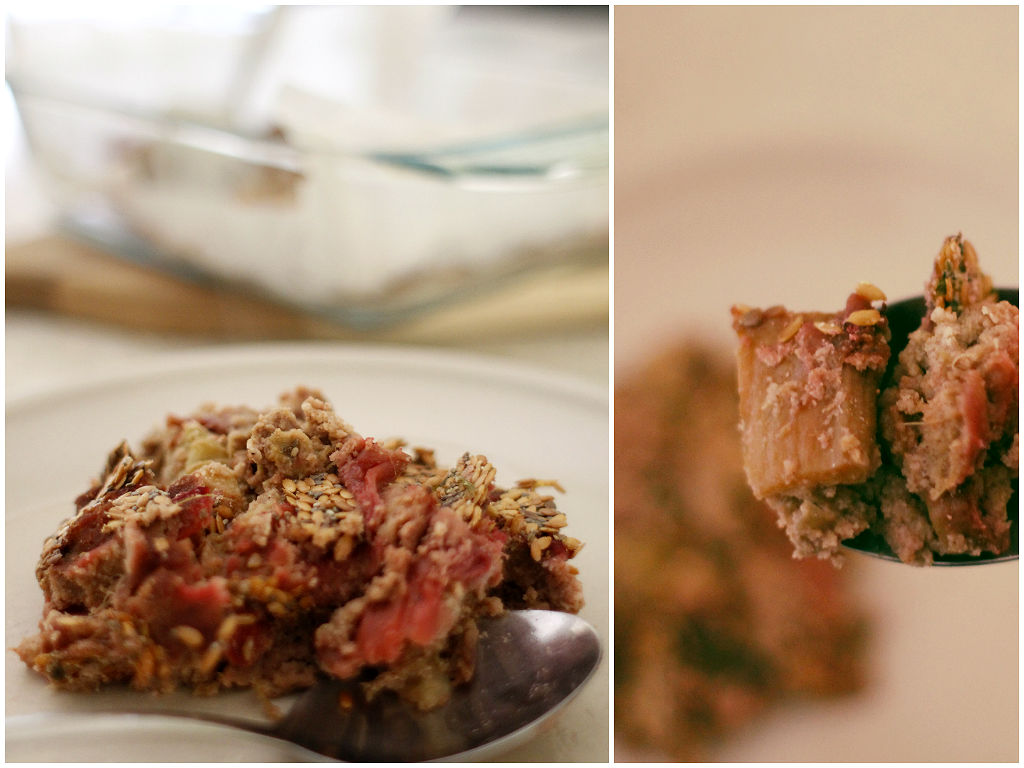
In this recipe, I added maple syrup to counterbalance the tartness of the rhubarbs and rose water, vanilla and cinnamon to compliment the rhubarbs. Make it for dessert and have the leftovers for next morning. It is delicious x
rhubarb pieIngredients

For the filling
3 stalks of rhubarb, cleaned and chopped
1/2 cup rose water
1/2 cup maple syrup
1 tsp vanilla bean powder
1 tsp cinnamon
1/2 tsp nutmeg
a pinch of Himalayan salt
1/2 cup coconut flour

For the topping
1 tbsp chia seeds
1 tbsp golden flaxseed

Put all filling ingredients except coconut flour in a saucepan and simmer for 15-20 minutes until rhubarbs are tender. Take it off the heat and let it cool. Then mix the rhubarb mixture and coconut flour in a bowl and stir to combine. Transfer to a baking dish and sprinkle chia seeds and golden flaxseed. Bake in the preheated oven (180) for about 30 minutes. Serve warm with thick Greek yogurt or coconut cream.

GF Chia Flaxseed Biscuit

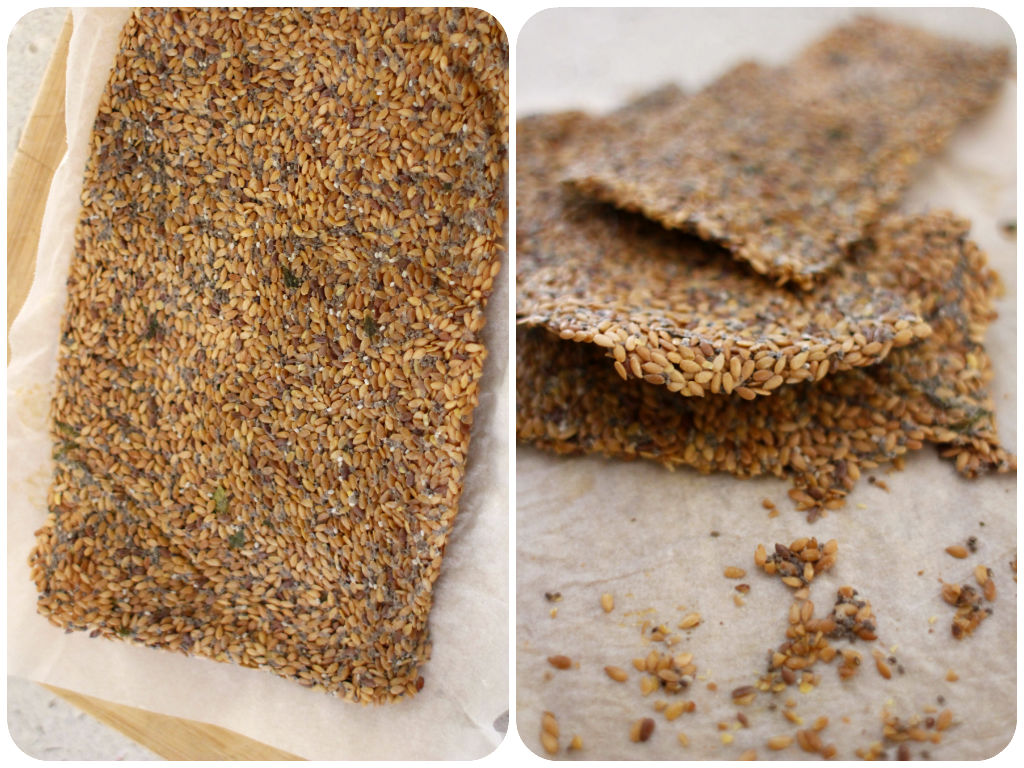
flaxseed biscuitI’ve been down to the local health grocery shop near my house yesterday and saw a packet of “Flackers” which I wanted to buy and try. Then my eyes almost popped out when I saw the price. Seriously, 5 small crackers in a small packet costs nearly 10 dollars! So I decided to make one at home. It is surprisingly super easy to make without dehydrator and all you need is just two ingredients. Woohoo, Are you ready?

Flaxseed‘s health benefits come from the fact that it’s high in fiber and omega-3 fatty acids, as well as phytochemicals called lignans. One tablespoon of ground flaxseed contains 2 grams of polyunsaturated fatty acids (includes the omega 3s) and 2 grams of dietary fiber and 37 calories. Ground flaxseed is better than whole one because the ground form is easier for your body to digest. Whole flaxseed may pass through your intestine undigested, which means you won’t get all the benefits. Dehydrating is a great way of keeping healthy oils and nutritional properties in raw flaxseed from the high heating. It also creates a nice and crispy texture.

Ingredients (30cm x 20cm, thin cracker)

50g golden flaxseed
1 tbsp chia seeds
a pinch of Himalayan salt
50g water

Put flaxseed and chia seeds in your food processor and pulse a few times. Season with salt and add water. Let it sit for 20-30 minutes until they all stick together. Pour the mixture on a baking paper and spread evenly with a spatula. Bake in 100 degree oven for about 90 minutes, flipping about halfway. Take it out of the oven and cool it down. Carefully peel off the baking paper and cut into squares. Feel free to add some dried herbs and spices in this recipe to make it more interesting – garlic powder, onion powder, thyme, sesame seeds, tamari, cacao, pumpkin or sunflower seeds, etc.

Flaxseed is an excellent source of essential fatty acids—great for your skin, body and overall health. Baking with ground flax or flaxseed is great for texture, but the high heating breaks down the oils and nutritive properties of the flaxseed. So dehydrating raw flaxseed by baking it at your oven’s lowest temperature is the way to go. This recipe creates savory crispy crackers that optimally preserve the goodness of flaxseed. – See more at: http://www.cooktj.com/node/133#sthash.aK1pdrHS.dpuf