 I have been off meat or seafood for a while now. People might think so how do you get protein from vegetarian diet? For some reason, we’ve been told that we need more protein to lose weight and get “healthy”. I’m sure you all know about “high-protein, low-carb diet”. Athletes reveal their diet program that has a piece of protein for breakfast, lunch and dinner. You can easily find big tubs of protein supplements at the shops. People seem to be so obsessed with protein (well, I used to be, too). How much protein do we actually need? The RDA recommends that we take in 0.8 grams of protein for every kilogram that we weigh (0.9 grams for a vegetarian/vegan).
Sorry for the late answer, but yes, it is very easy for me to meet the daily recommended protein. Nearly all vegetables, beans, grains, nuts, and seeds contain some, and often much, protein. The best sources are legumes, soy products, nuts and seeds. Grains and vegetables also contain protein, but in smaller amounts. Most plant protein sources are lower in saturated fat, free of cholesterol, higher in fibre, antioxidants and phytochemicals. This means there is a lower risk of obesity and chronic disease such as diabetes, hypertension and heart disease which comes from a high intake of animal protein. I’m not encouraging you to go on a vegetarian diet here, but be aware how much protein you are having. Too much protein can cause weight gain and put too much pressure on your body. High protein diet makes your body to use fat for energy. Ketones that are produced while the body breaks down the fat are poisonous. Your liver and kidneys have to work extra hard to get rid of it through urine.
Ok, if you are already on a vegetarian diet, pay extra attention to your meal plan. Protein is made up of amino acids, often described as its building blocks. There are two types of amino acids – essential (the body cannot adequately synthesise them and must obtain them from the diet) and non-essential (the body can make them). Protein foods that have large amounts of all essential amino acids are often referred to as high-quality proteins. Plant proteins may be low on the amounts of one or two of the essential amino acids. So try to eat a variety of unrefined grains, legumes, seeds, nuts, and vegetables throughout the day, so that if one food is low in a particular essential amino acid, another food will make up this deficit.
 Rice is a wholesome and nutritious cereal grain and it has qualities that make it ideally suited for special dietary needs. Rice is cholesterol-free, sodium-free, a complex carbohydrate, gluten-free, non-allergenic and easy on digestion. Rice protein, when compared to that of other grains, is considered one of the highest quality proteins. It has all eight of the essential amino acids and is also a good source of other essential nutrients – thiamin, riboflavin, niacin, phosphorus, iron, and potassium. There is no reason not to love these little beauty, right?
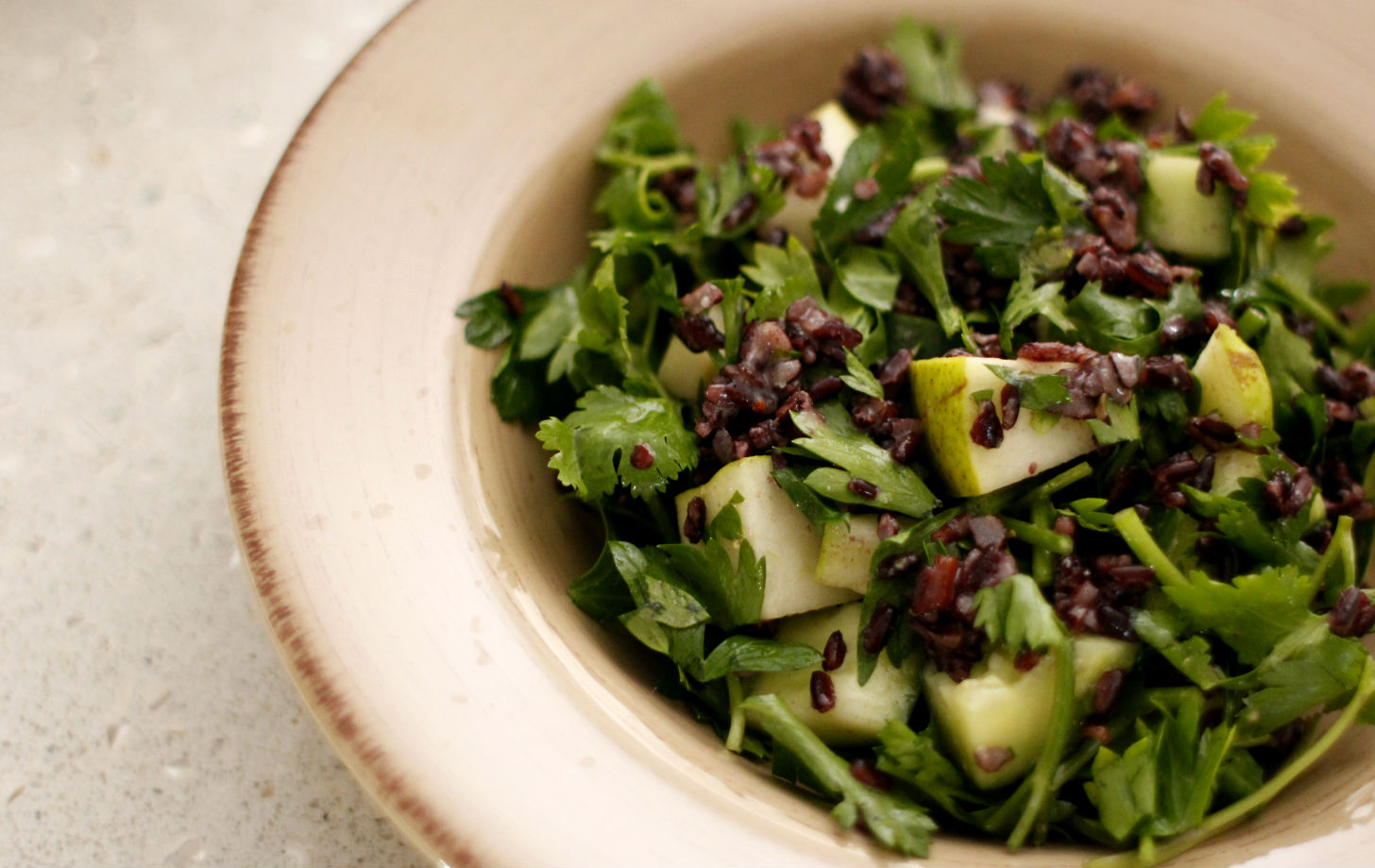
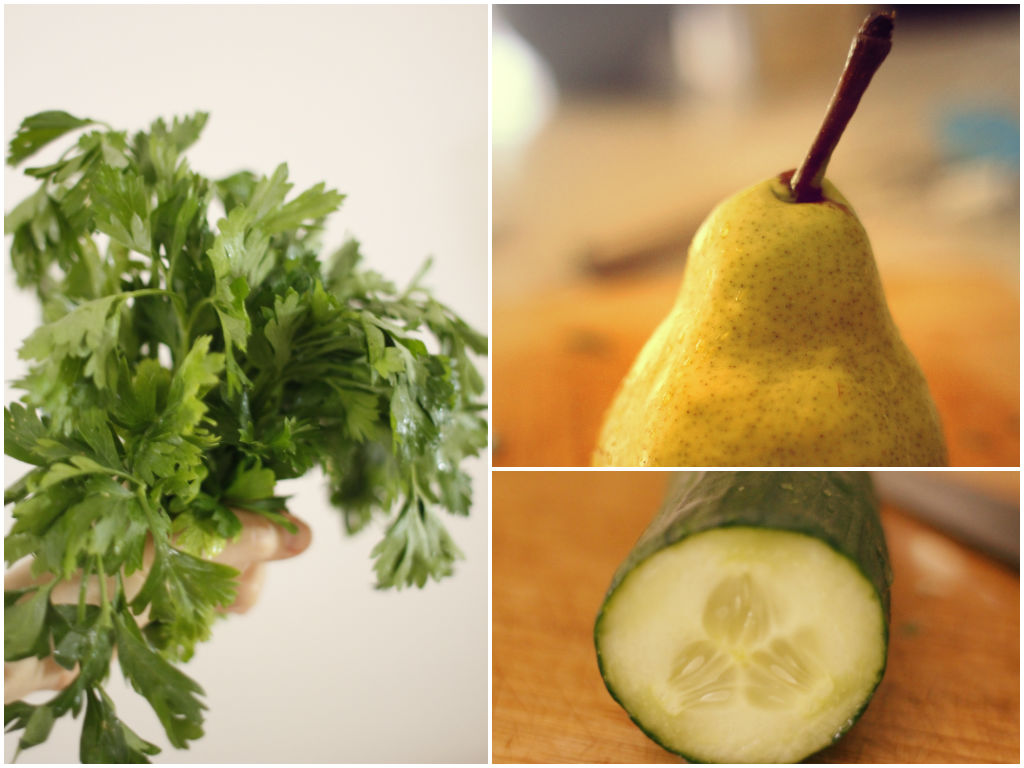
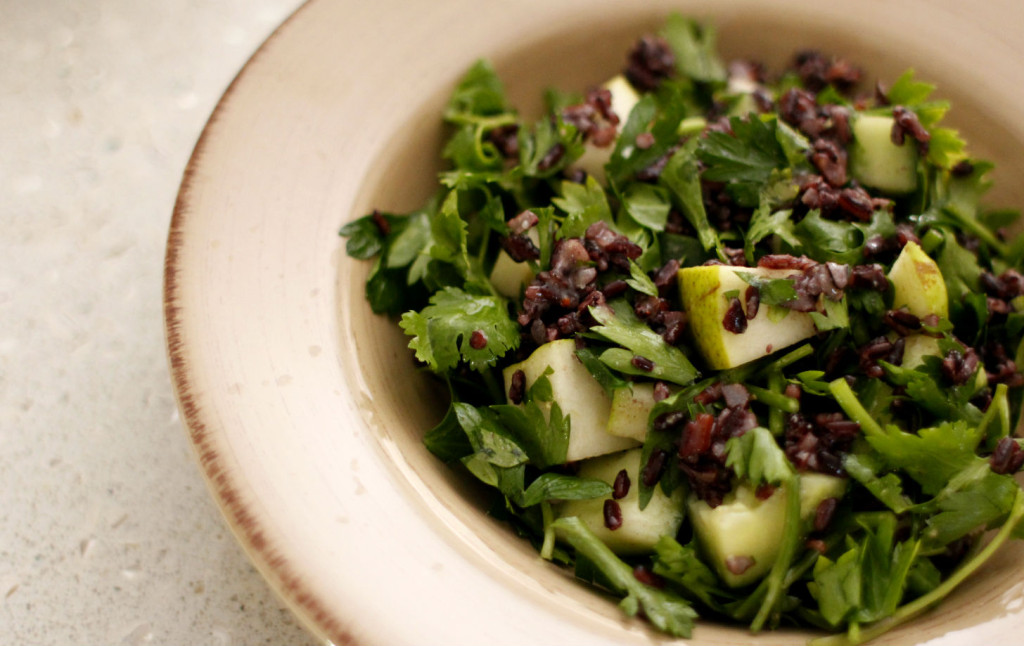
This rice salad is light yet satisfying, good enough for a main course. It has the beautiful combination of nutty and smokey wild rice, sweet pears, crunchy cucumber and bitter parsley with a tangy and sweet vinaigrette.
 Ingredients
1 cup of chopped parsley
1 cup of chopped coriander
1 pear
1/2 cucumber
1 cup cooked wild rice
1 tsp Dijon mustard
1 tsp white wine vinegar
1 tsp maple syrup
1/2 tsp cayenne pepper
a squeeze of lemon
salt and pepper to taste
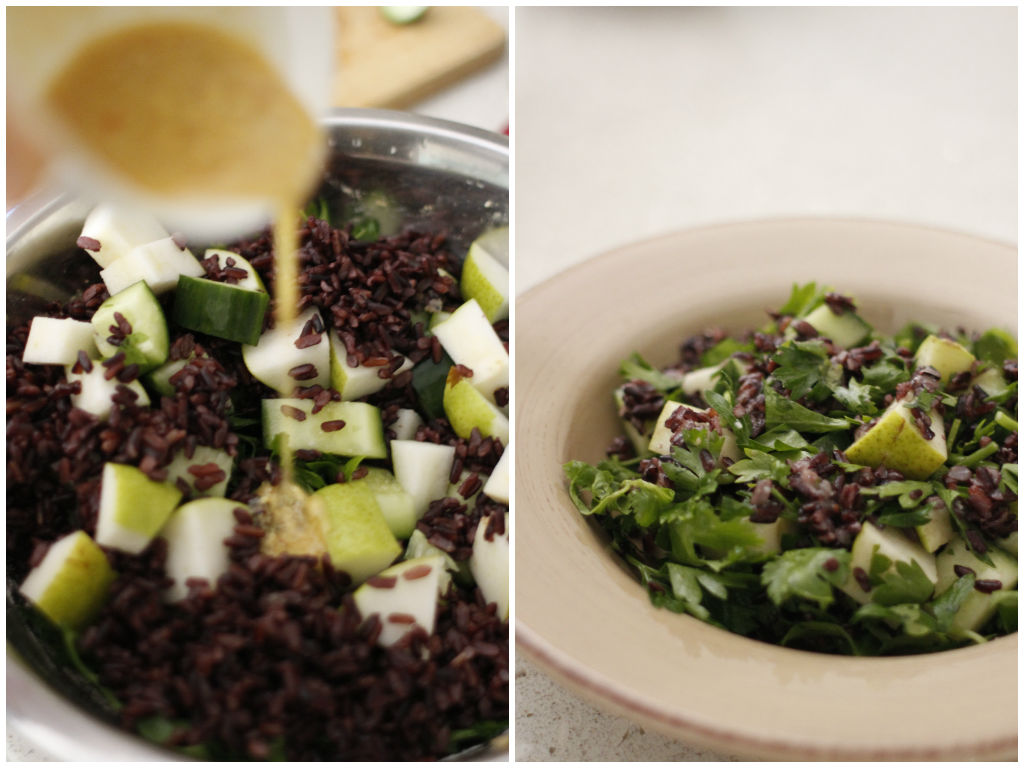
Rinse and cook wild rice in a boiling water for 40 minutes or until cooked. Drain and set aside. Put cooked wild rice, chopped parsley, coriander, pear and cucumber in a large bowl. To make a dressing, mix Dijon mustard, vinegar, maple syrup, cayenne pepper, lemon juice, salt and pepper in a small bowl. Pour the dressing over the salad and toss to combine.
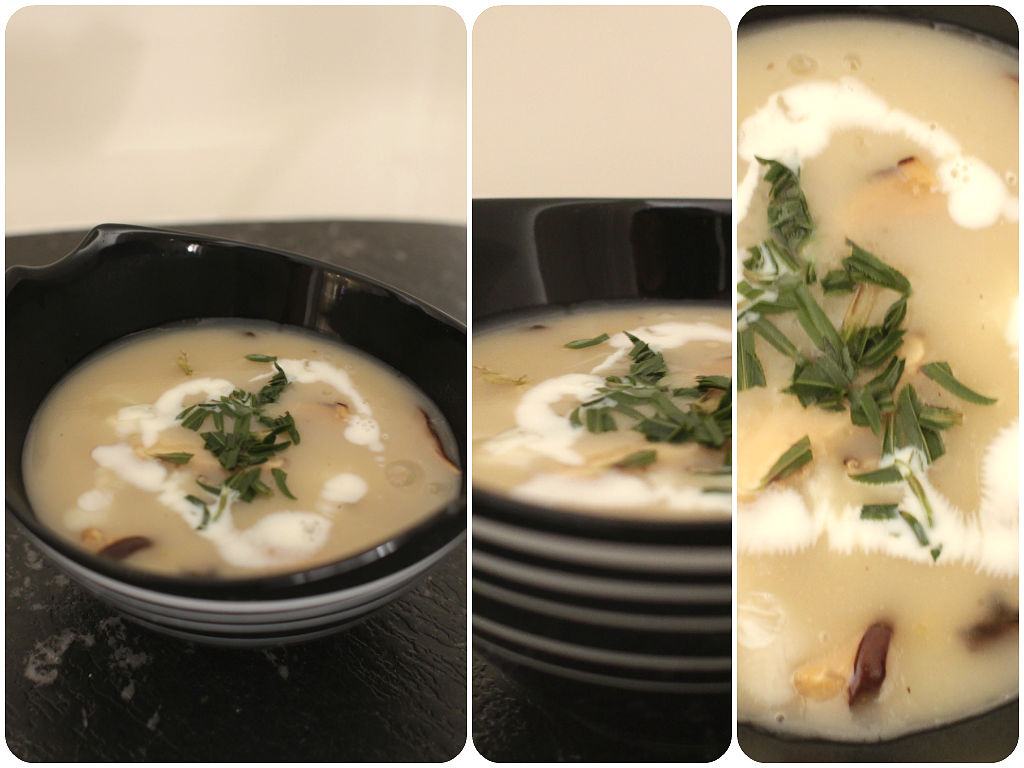 I normally make clear soups with a lot of spices and herbs. Though I sometimes get a craving for a creamy rich soup with earthy mushrooms. Don’t get me wrong I do not want any butter or cream in my soup to make me feel heavy. I’m talking about the meatiness of the mushrooms which can satisfy my cravings and fill me up. Their robust texture and flavour is great for vegetarian dishes. Not only that, they are an excellent source of iron, selenium, potassium, phosphorus, riboflavin, copper, and zinc. This soup goes well with herbs like rosemary, thyme or parsley, even better if you can get a hold of fresh ones. Have some soup and stay warm everyone x
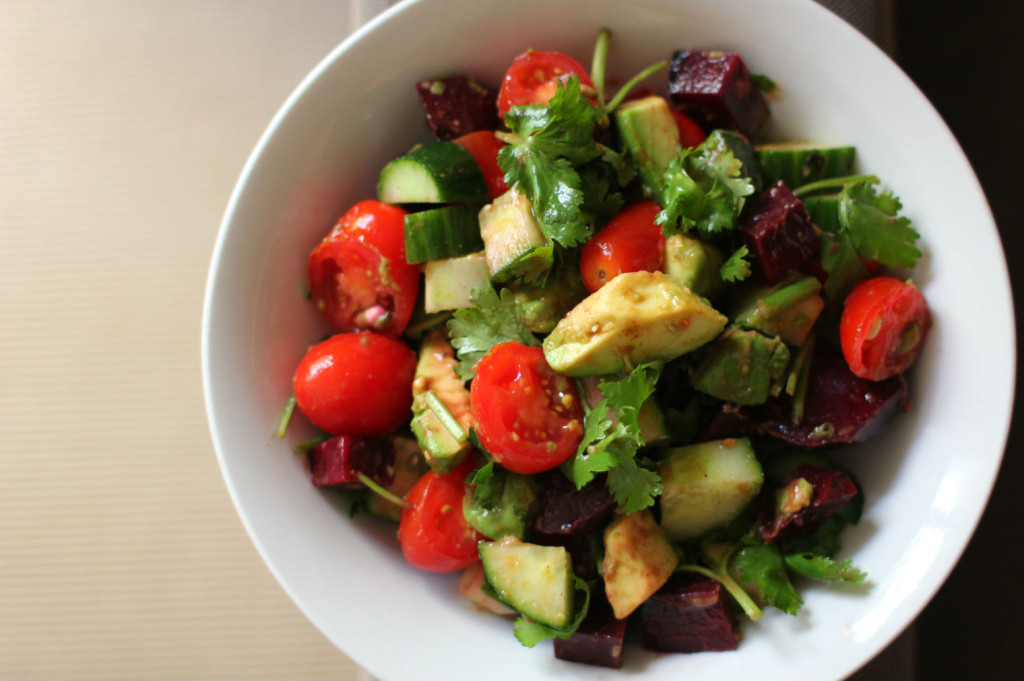 I’m definitely on a salad kick at the moment. What not to love making beautiful salads. I like the simplicity of making them, yet the complex flavours and textures that I can create with raw veggies and a light yummy dressing to combine all together. It is an art!