Greens with Wild Rice

GreensI have been off meat or seafood for a while now. People might think so how do you get protein from vegetarian diet? For some reason, we’ve been told that we need more protein to lose weight and get “healthy”. I’m sure you all know about “high-protein, low-carb diet”. Athletes reveal their diet program that has a piece of protein for breakfast, lunch and dinner. You can easily find big tubs of protein supplements at the shops. People seem to be so obsessed with protein (well, I used to be, too). How much protein do we actually need? The RDA recommends that we take in 0.8 grams of protein for every kilogram that we weigh (0.9 grams for a vegetarian/vegan).

Sorry for the late answer, but yes, it is very easy for me to meet the daily recommended protein. Nearly all vegetables, beans, grains, nuts, and seeds contain some, and often much, protein. The best sources are legumes, soy products, nuts and seeds. Grains and vegetables also contain protein, but in smaller amounts. Most plant protein sources are lower in saturated fat, free of cholesterol, higher in fibre, antioxidants and phytochemicals. This means there is a lower risk of obesity and chronic disease such as diabetes, hypertension and heart disease which comes from a high intake of animal protein. I’m not encouraging you to go on a vegetarian diet here, but be aware how much protein you are having. Too much protein can cause weight gain and put too much pressure on your body. High protein diet makes your body to use fat for energy. Ketones that are produced while the body breaks down the fat are poisonous. Your liver and kidneys have to work extra hard to get rid of it through urine.

Ok, if you are already on a vegetarian diet, pay extra attention to your meal plan. Protein is made up of amino acids, often described as its building blocks. There are two types of amino acids – essential (the body cannot adequately synthesise them and must obtain them from the diet) and non-essential (the body can make them). Protein foods that have large amounts of all essential amino acids are often referred to as high-quality proteins. Plant proteins may be low on the amounts of one or two of the essential amino acids. So try to eat a variety of unrefined grains, legumes, seeds, nuts, and vegetables throughout the day, so that if one food is low in a particular essential amino acid, another food will make up this deficit.
Greens1Rice is a wholesome and nutritious cereal grain and it has qualities that make it ideally suited for special dietary needs. Rice is cholesterol-free, sodium-free, a complex carbohydrate, gluten-free, non-allergenic and easy on digestion. Rice protein, when compared to that of other grains, is considered one of the highest quality proteins. It has all eight of the essential amino acids and is also a good source of other essential nutrients โ€“ thiamin, riboflavin, niacin, phosphorus, iron, and potassium. There is no reason not to love these little beauty, right?

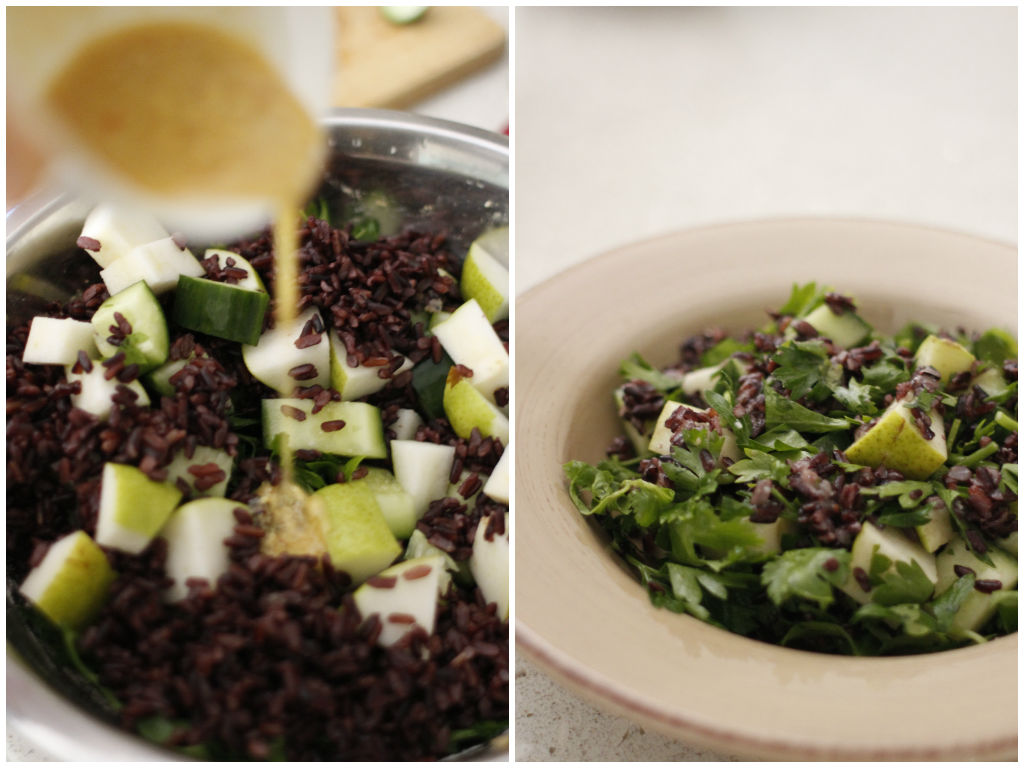
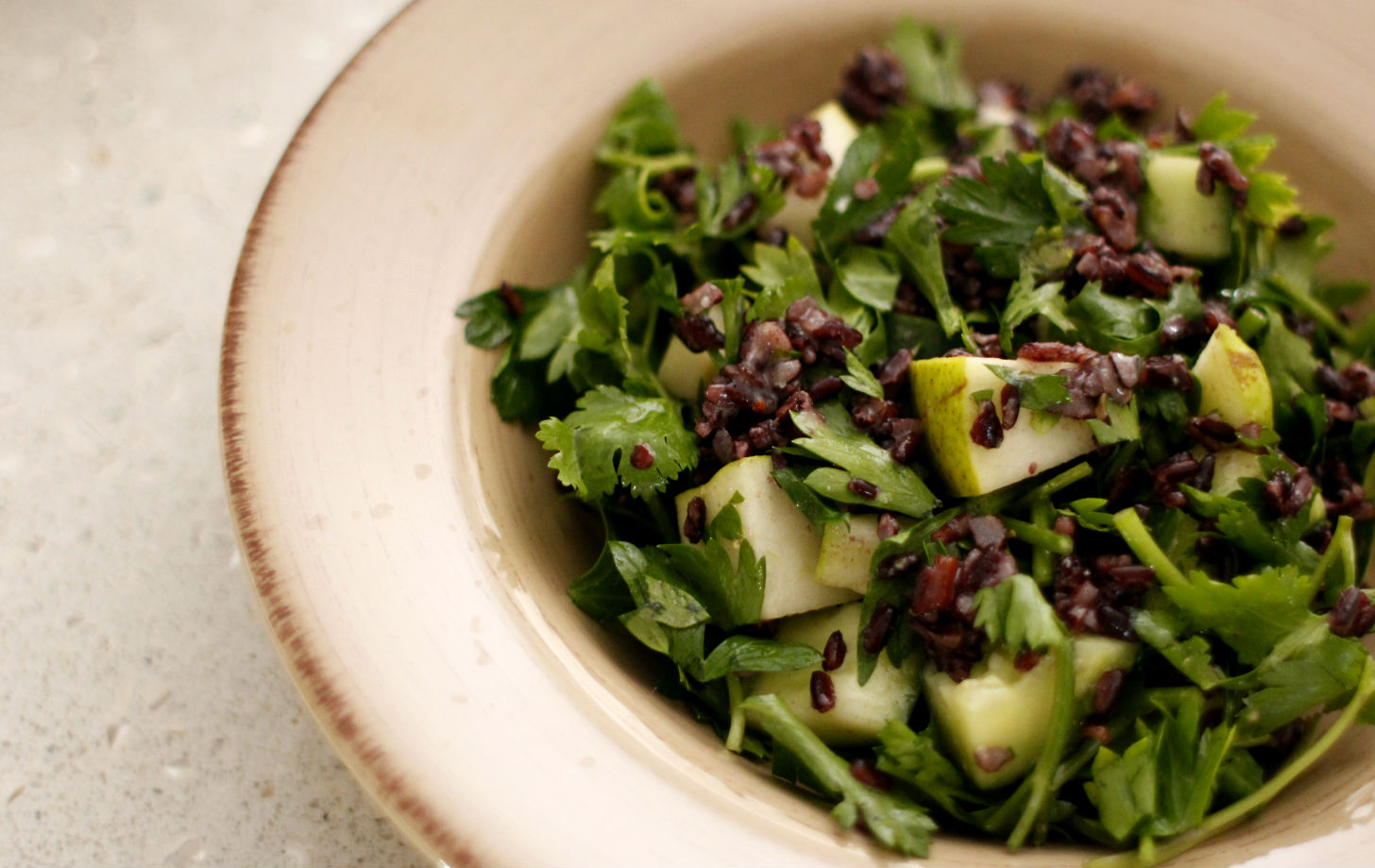
This rice salad is light yet satisfying, good enough for a main course. It has the beautiful combination of nutty and smokey wild rice, sweet pears, crunchy cucumber and bitter parsley with a tangy and sweet vinaigrette.
greens2Ingredients

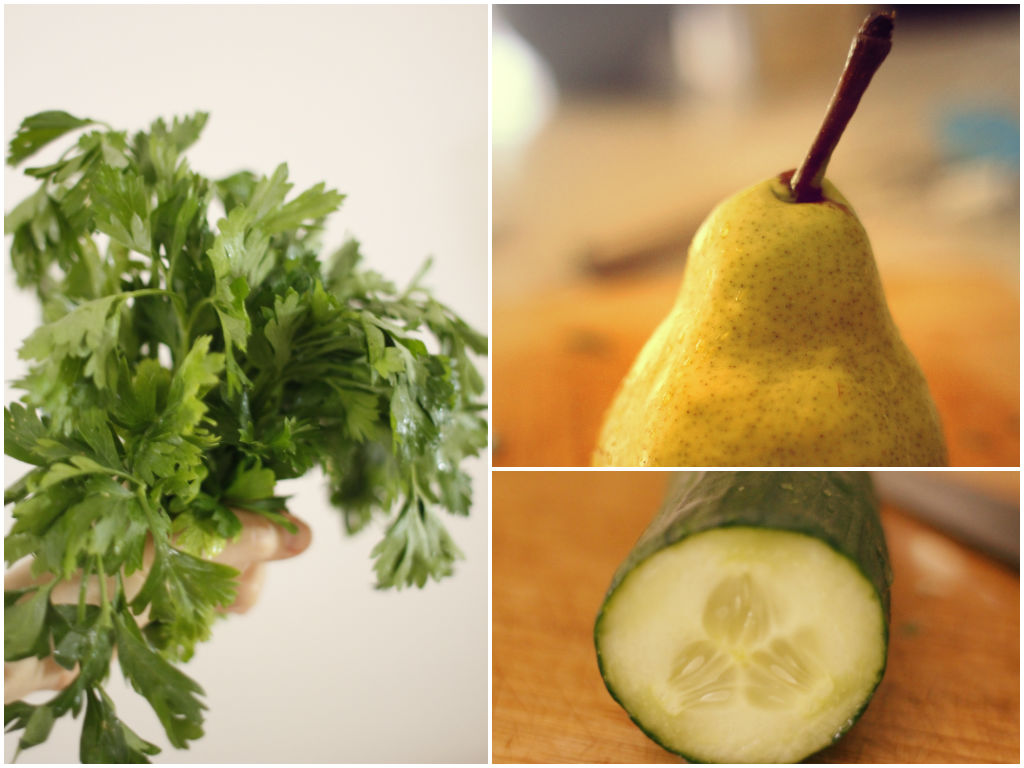
1 cup of chopped parsley
1 cup of chopped coriander
1 pear
1/2 cucumber
1 cup cooked wild rice
1 tsp Dijon mustard
1 tsp white wine vinegar
1 tsp maple syrup
1/2 tsp cayenne pepper
a squeeze of lemon
salt and pepper to taste

Rinse and cook wild rice in a boiling water for 40 minutes or until cooked. Drain and set aside. Put cooked wild rice, chopped parsley, coriander, pear and cucumber in a large bowl. To make a dressing, mix Dijon mustard, vinegar, maple syrup, cayenne pepper, lemon juice, salt and pepper in a small bowl. Pour the dressing over the salad and toss to combine.
Persimmon Pomegranate Salad

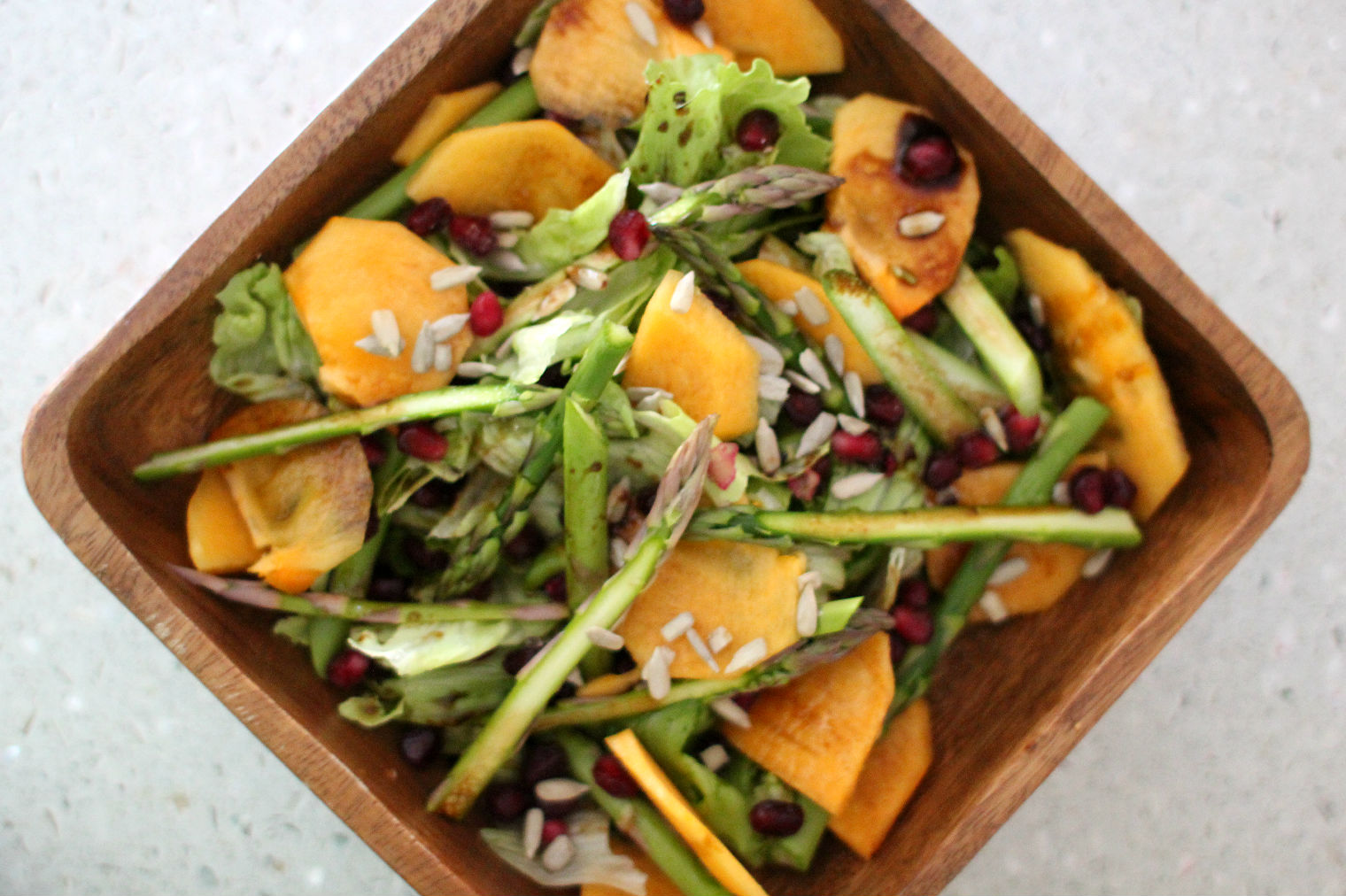
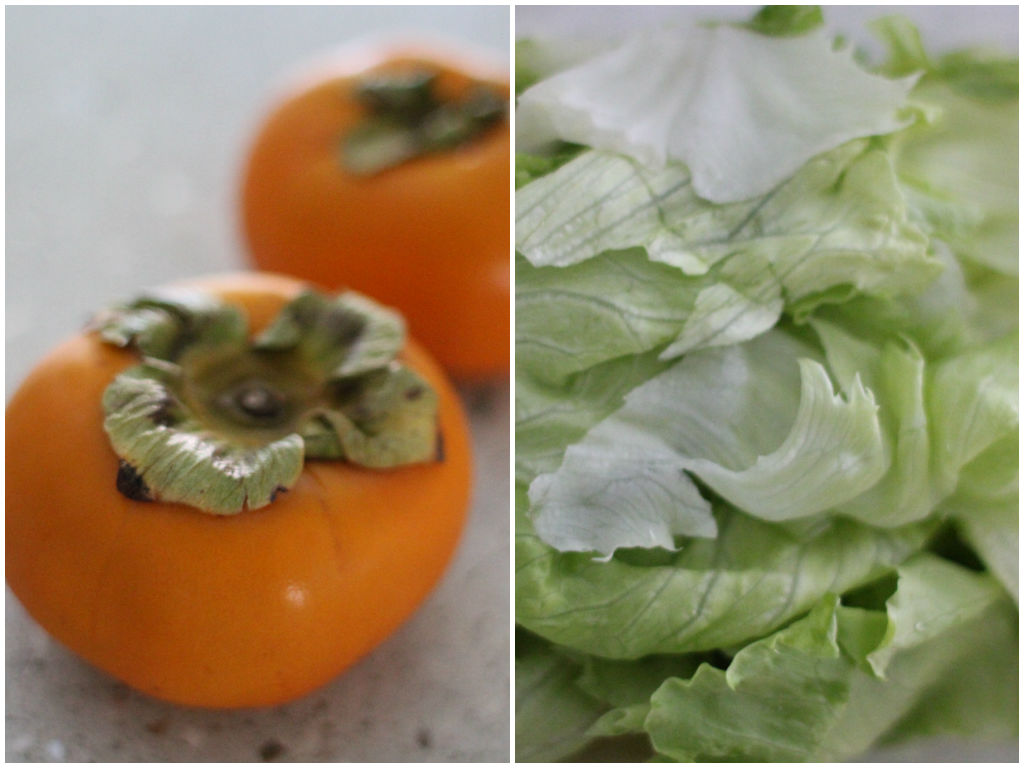
persimmonAutumn fruits are finally out. Yay! Autumn is my favorite season in Korea. My family used to go to the mountains or national park to watch beautiful autumn colours of the trees in Korea. It is just stunning when blanketed with vivid golden and red autumnal leaves under the clear blue sky. And autumn fruits are so abundant that time of the year (September to November). I like all fruits, but persimmon is one of my favorites. A crunchy and crisp texture and a full of natural sweetness. Delicious! I like variations of it, too. Semi-dried ones and soft ones. It is a great match for both savoury and sweets. If you’ve never tried it before, well you should. You can mix it through salads, serve thin slices on a cheese platter, add into your stir-fry, make sweet crumbles or top on your breakfast cereal/porridge. It is so versatile. A sweet persimmon contains twice the dietary fibre of an apple and higher levels of many minerals and antioxidants. They are also a good source of vitamin A and C, potassium and beta carotene as well as some calcium, magnesium, phosphorus and iron. Now all you have to do is go down to the markets this weekend and get persimmon fruits ๐Ÿ™‚
persimmon saladIngredients

2 cup of lettuce, roughly chopped
1 persimmon, thinly sliced
1/2 cup of pomegranate seeds
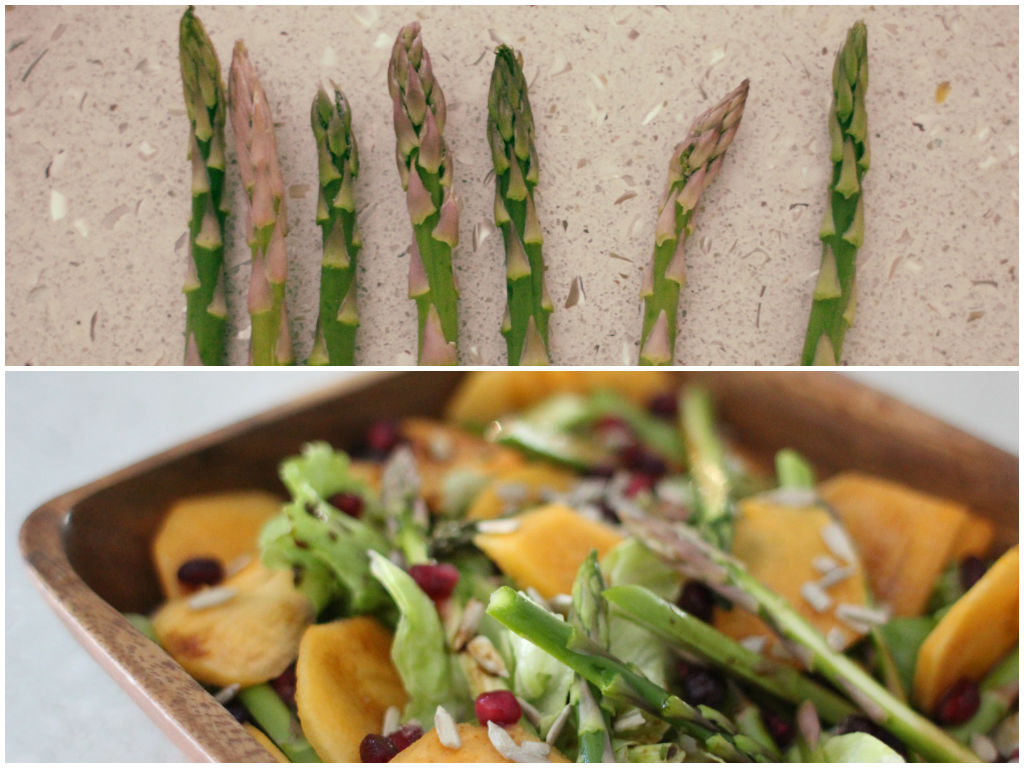
1 bunch of asparagus
1 tbsp of sunflower seeds

For dressing
1 tbsp pomegranate juice or 1 tsp molasses
1 tsp balsamic vinegar
1 tsp maple syrup
1 tsp olive oil
a pinch of Himalayan salt

Add all the salad ingredients in a large bowl. Mix all dressing ingredients in a separate bowl or shake them in a jar with a lid. Pour the dressing over the salad and gently toss. Transfer to a serving plate and sprinkle sunflower seeds.
persimmon salad1

Roasted Parsnip Chips

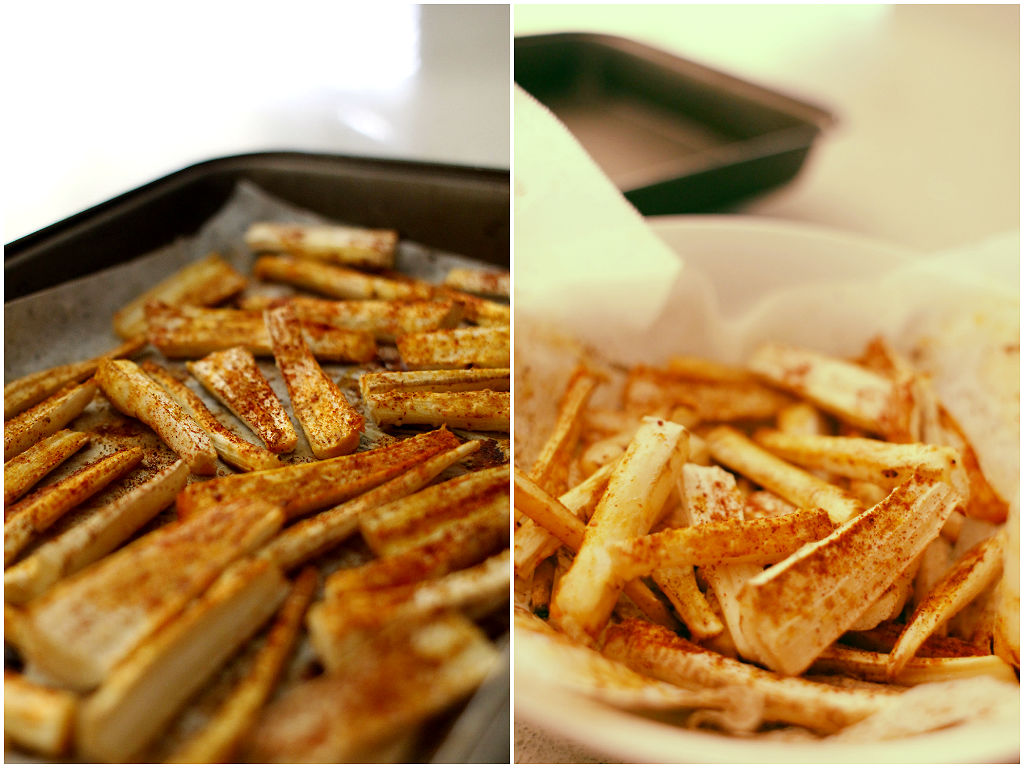
Have you had roasted parsnip before? I do like root vegetables, but I haven’t actually used parsnips that much. I tried it raw, which has a bit of bitter and earthy taste. Then I made roasted chips in the oven and it tastes quite sweet from caramelisation. Just like carrots and pumpkins, roasting process brings out all the natural sweetness from this amazing root. They are healthy and a perfect alternative to fried potato chips.

Parsnips are an excellent source of soluble fibre, which keeps your cholesterol and blood sugar level down, helps regular bowel movements and helps your digestion. Potassium found in parsnips regulates blood pressure and helps the proper muscle and nerve function. They also have vitamin C, which acts as anti-oxidant and boosts the immune system. Great for pregnant women because folic acid or folate is abundant in parsnips, which reduces the risk of birth defects, lowers the risk of acquiring heart diseases and may also help prevent dementia and osteoporosis.

Parsnips are so versatile and exciting! You can add raw or cooked parsnips into your salads, make a warm soup with carrots and apples, make a hearty gratin dish in chilly weather, make little pancakes with grated parsnips, and even add into your cakes and muffins for healthy baking.

parsnip chipsTo roast parsnips, scrub the roots clean and slice into strips. I seasoned with Himalayan salt, smoked paprika, curry powder and pepper, and drizzled olive oil. Put in the oven at 200 degrees for about 20 minutes or until they are golden brown.

Lentil Olive Tapenade

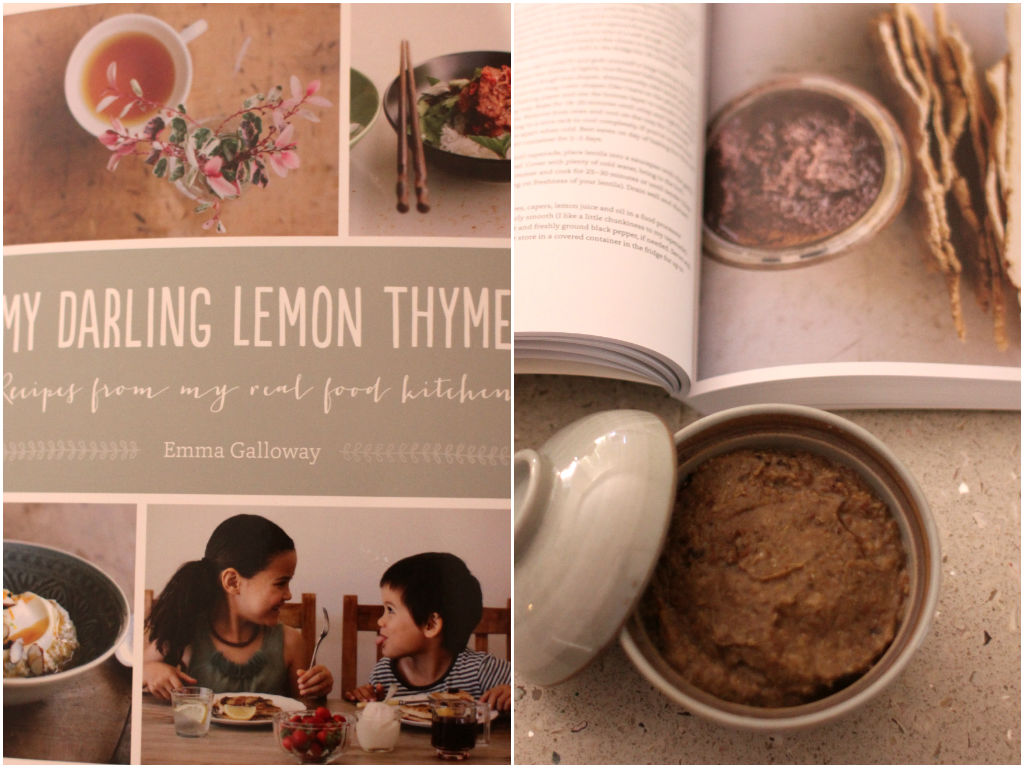
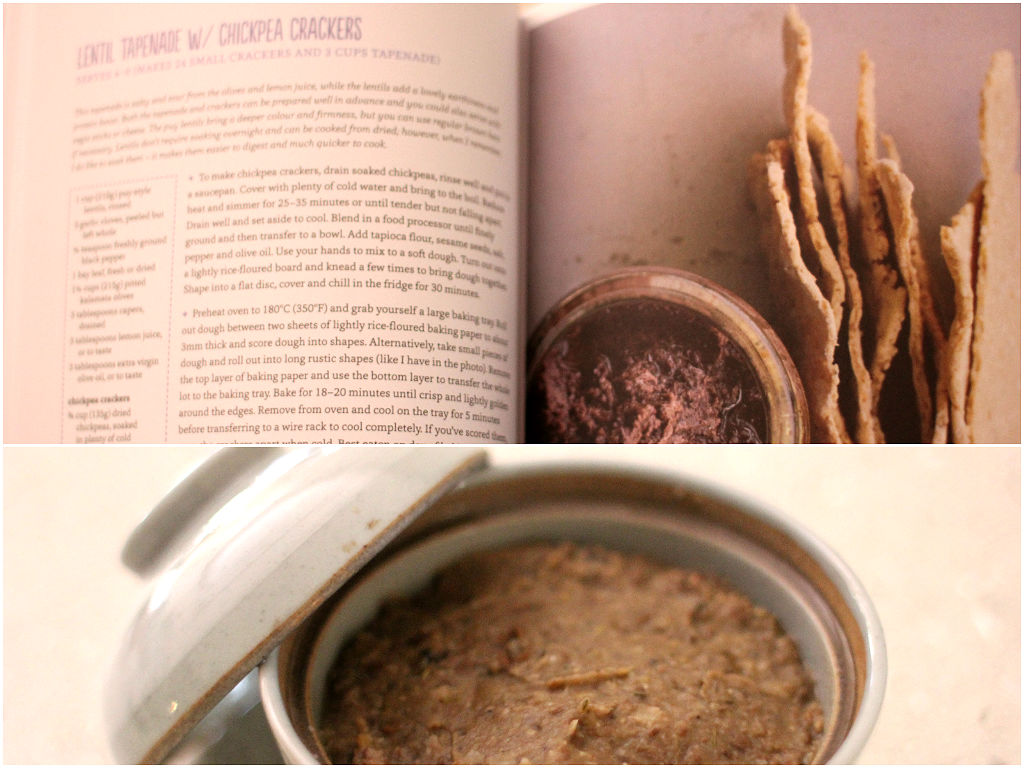
Lentil tapenadeI happened to come across this beautiful food blog called My Darling Lemon Thyme. As soon as I saw the photos and recipes, I fell in love. Her style of cooking was exactly what I was looking for – easy, simple, healthy, gluten-free and vegetarian. Surprisingly, she lives in Perth, as well. Then she released her first cookbook recently and I was lucky enough to go to a book launch in Mount Lawley. Meeting her and her family in person, listening to her story, tasting three of her recipes from the book, yes! getting that beautiful cookbook in my hands. It was a wonderful night and gave me so much encouragement, believing in myself and what I really like and am passionate about. One of the dishes that came out is this lentil tapenade. It was delicious on carrot sticks and chickpea crackers. I had to try make one at home with my own spin on it. I mixed two kinds of lentils – French puy and brown lentils, added toasted pine nuts for nutty flavour and crunch.

โ€œTapenadeโ€ is just a fancy word for an olive spread. This lentil black olive tapenade recipe isnโ€™t the classic one, but itโ€™s tasty and a wonderful nutrient-dense spread.

Lentils are sky-high in soluble fibre, which slows down digestion and fills you up. As soluble fibre enters the digestive tract, it absorbs water and dissolves into a viscous gel that reduces the absorption of cholesterol into the bloodstream. Potassium found in lentils helps to lower blood pressure. They are also rich in folate and B vitamins for fighting against cancer, iron for boosting energy, great vegetarian protein and antioxidants. French puy lentils, my favorite kind, has rich and peppery flavour, stay firm when cooked, great for salads, tabbouleh and pilafs.
lentil tapenade1Ingredients (adapted from My darling lemon thyme)

100g dried French puy and brown rentils
1/2 tsp of minced garlic1 heap table spoon of chopped pitted black olives
1 tsp of rinsed capers
1 tbsp of e.v.o.o
a squeeze of lemon
a pinch of salt
a handful of toasted pine nuts
pepper to taste

Wash the lentils thoroughly, put in a saucepan, cover with cold water, bring it up to a boil and simmer on low heat for 20-30 minutes until cooked. Drain and set aside. Put all the other ingredients and cooked lentils in a food processor and pulse until smooth. Season with salt and pepper. Serve with crackers or veggie sticks.

Mung Bean Stew

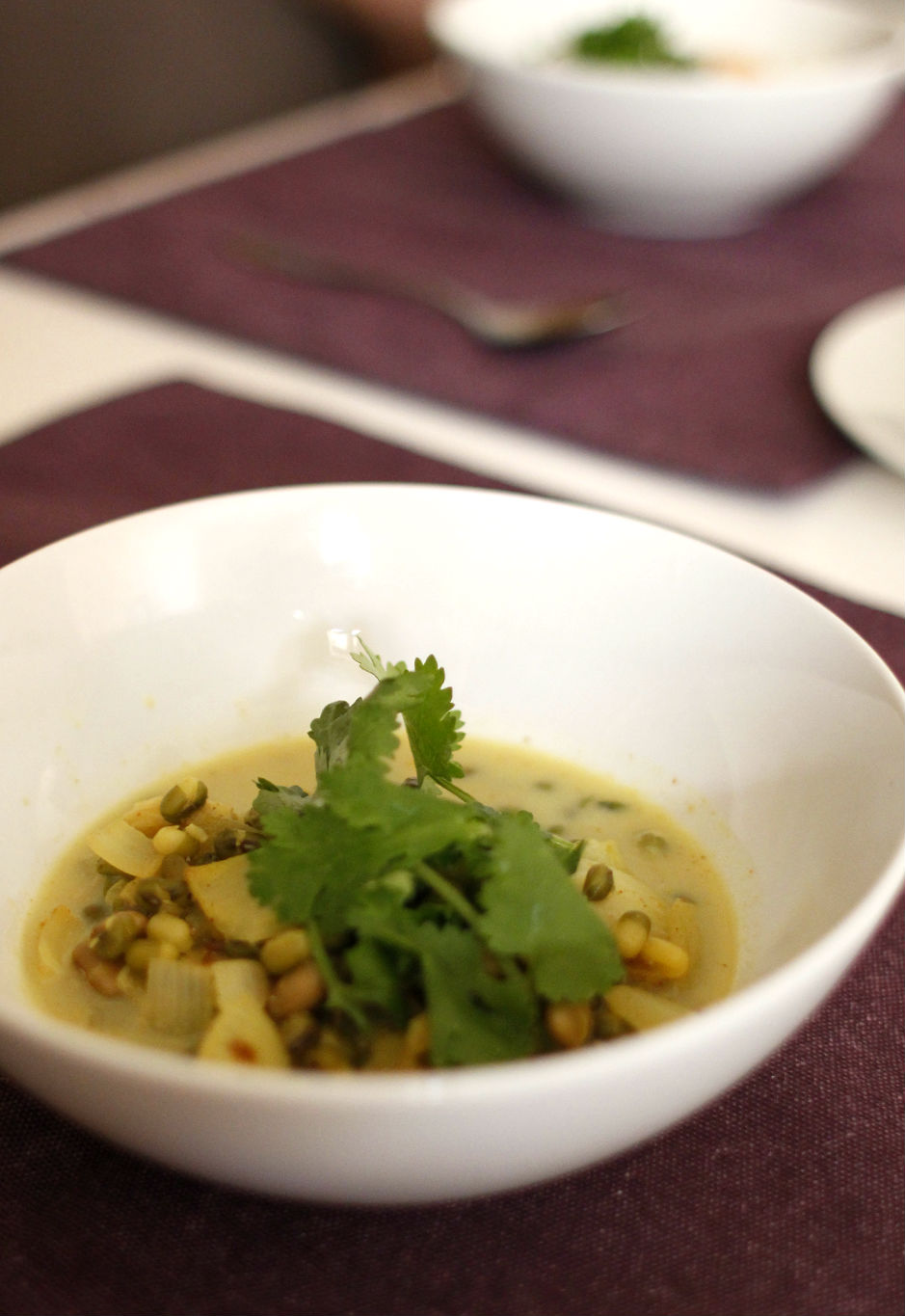
Aside from being one of the quickest legumes to prepare and the easiest of all beans to digest, mung beans have numerous positive health benefits. They are a good source of essential fatty acids, antioxidants, minerals, and protein. Green mung bean is known as the dosha balancing food according to Ayurveda, it cleanses the gut if taken regularly. It has significant amount of soluble fiber that helps cleanse and heal the body at multiple levels.
mung bean stew
Ingredients

1 cup of mung beans
1 white onion
1 tsp coconut oil
1/2 tsp turmeric
1 tsp cumin
1 tsp ginger
1 tsp minced garlic
1 tsp garam masala
2 cups of water or vegetable stock to cook mung beans
1 cup of coconut milk
salt and pepper to taste

Soak mung beans overnight. Rinse and cover with water in a pot. Bring it up to a boil and simmer for 20-30 minutes or until cooked. Drain and set a side. Heat coconut oil in a pan and add chopped onion and spices. Saute for 5 minutes until soft and fragrant. Add cooked mung beans and stir in coconut milk. Simmer for another 5 minutes. Take it off the heat and transfer to a serving bowl. Serve warm over rice or with bread.