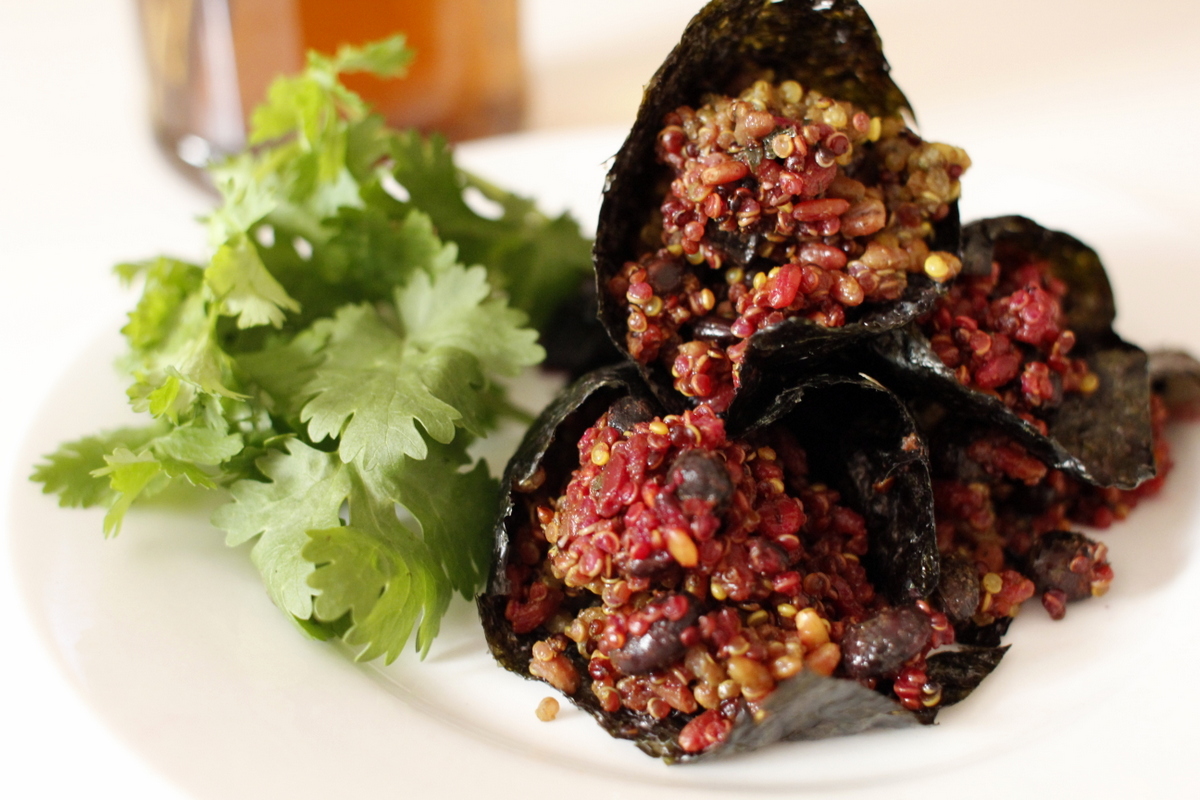
Nori Wrap with Quinoa and Black Beans

_MG_0526

A quick shot of my lunch before it has gone. I made a simple nori wrap with quinoa and black beans.

I only found out about quinoa a.k.a “the gold of the Incas” a couple of years ago as I started my clean eating. It is popular now that you can find it easy at the local health shops. Surprisingly, most quinoa comes from South America where it is grown wild and pesticides are not used. So you don’t have to worry too much about buying ‘organic’ foods as it is naturally organic.

Shame I didn’t know about it almost 30 years! I even introduced to my mum back in Korea where quinoa is not that common yet and hard to find. She has fallen in love with it now since I taught mum mixing quinoa through rice for more nutrition and flavour. These little guys are without doubt one of the superfoods.

– A high protein grain alternative: quinoa contains more than double the amount of protein found in the standard grains and also has a complete amino acid profile

– More fiber: fiber relieves constipation and helps to prevent heart disease by reducing blood pressure and diabetes. It also makes you feel full longer, acting as a natural appetite suppressant.

– Contains iron, lysine, magnesium, Riboflavin (B2) and manganese

– It’s gluten free!

Cooking quinoa is so easy. I boil a cup of quinoa in a pot using a 1:1 ratio of quinoa and water for about 15 minutes in medium to low heat, just like the way you cook rice on stove. You can mix with other grains or beans as well. It is so versatile you can use for salads, soup, savory cakes, etc.
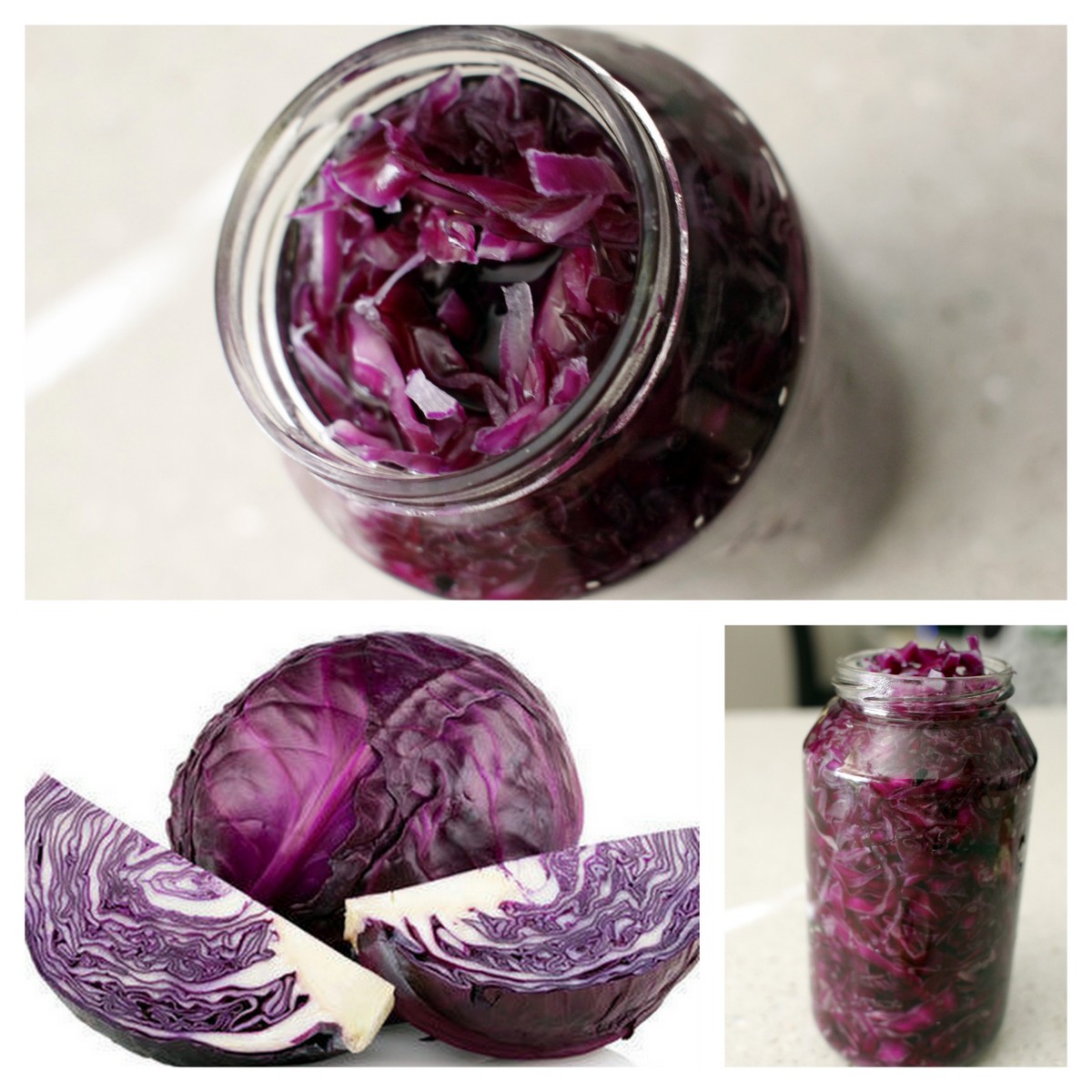
Making Sauerkraut

Lunch16

Just like Kimchi in Korea, sauerkraut is a fermented cabbage side dish which took root mostly in Eastern Europe and Germanic cuisines. I try to incorporate fermented foods in my diet such as Kimchi, sauerkraut, yogurt or kefir for my digestion.

As per my previous post on Kimchi, sauerkraut as a fermented food has many health benefits.

– easier to digest and absorb compared to eaten raw
– high in Vit B, C and K, calcium, potassium and magnesium
– low in calories
– lactobacilli and enzymes improve digestion and the growth of healthy bowel flora
– soothing the digestive tract, good for stomach ulcer
– high in antioxidants (lutein and zeaxanthin)

You can buy a jar of sauerkraut from the store though it is expensive, has preservatives and is very high in sodium. So why not making at home since it is extremely cheap and easy to make? It is also very rewarding when you make your own:)

All you need is sea salt and cabbage (I’ve chosen a red cabbage, but any cabbage would do). You need to massage and knead the shredded cabbage and sea salt with clean hands in a mixing bowl until it gets wet and excess water comes out of the mixture. Pack the moist cabbage mixture and liquid into a jar and close the lid tightly. Leave the jar in a cool dark place for a few days to allow the bacteria to start fermentation. Check everyday to see if it is soft and tangy. Then you can keep it in fridge to slower down the fermentation process. It goes well with any meat dishes as well as in salads – beautiful purple colour and intense flavour!

Caramelised Carrot & Butternut Pumpkin Salad with Sage

_MG_0496

Feeling like a sweet succulent salad? This carrot and pumpkin salad will satisfy you! My body is just calling for vegetables and salads this week probably due to an unhealthy (relatively) holiday last week. Today, I’m injecting beta-carotene into my body.

Yellow vegetables, like carrots and pumpkins, are so high in anti-oxidants, vitamins (especially carotenes and vit-A) and dietary fibre. On top of that, they are low in calories and fat. They do all the wonderful magics to your body – improving your vision, cancer prevention, anti-aging, healthy skin, cleansing, etc. You cannot ask more, can you?

Carrots are a great snack as well as side dishes. You can have it as raw with yummy hummus or soft cheese.  But when it’s cooked, beta-carotene can be absorbed to your body about five times more than when eaten raw. The reason being is a cooking process helps to dissolve a resistant cell wall of the carrots that locks in the beta-carotene. So you can maximise health benefits by cooking them. It is better to cook the whole carrots (e.g. boiling) before cutting or mashing them to preserve nutrients. Another way is like me, I chopped them up with butternut pumpkins and quickly cook in a frying pan with a teaspoon of coconut oil. You can add a drizzle of honey, balsamic vinegar, cumin seeds to enhance the flavour. Sage is one of the herbs that merry very well with carrots. I loved a smell of sage caramelising with carrots in a pan and also the colour – intense orange/ yellow plus beautiful caramelisation on the outside! Yummy lunch served so easy:)

Pumpkin Soup

Lunch8

My aunty lives in a country side after she and her husband retired. They now have a huge block of land full of organic fruits and vegetables that she is busy looking after. Thanks to her, all our family gets to eat fresh foods delivered to the door. She not only has a farmer’s hat but also is a great cook! She just has these magic hands that make all fresh produce turn out to be great dishes. Before I came back to Perth, she packed me a couple of bottles of freshly squeezed sesame oil, dehydrated pumpkin powder and concentrated plum tea. I always worry about losing the food items at the customs though it was fine this time. Hooray!

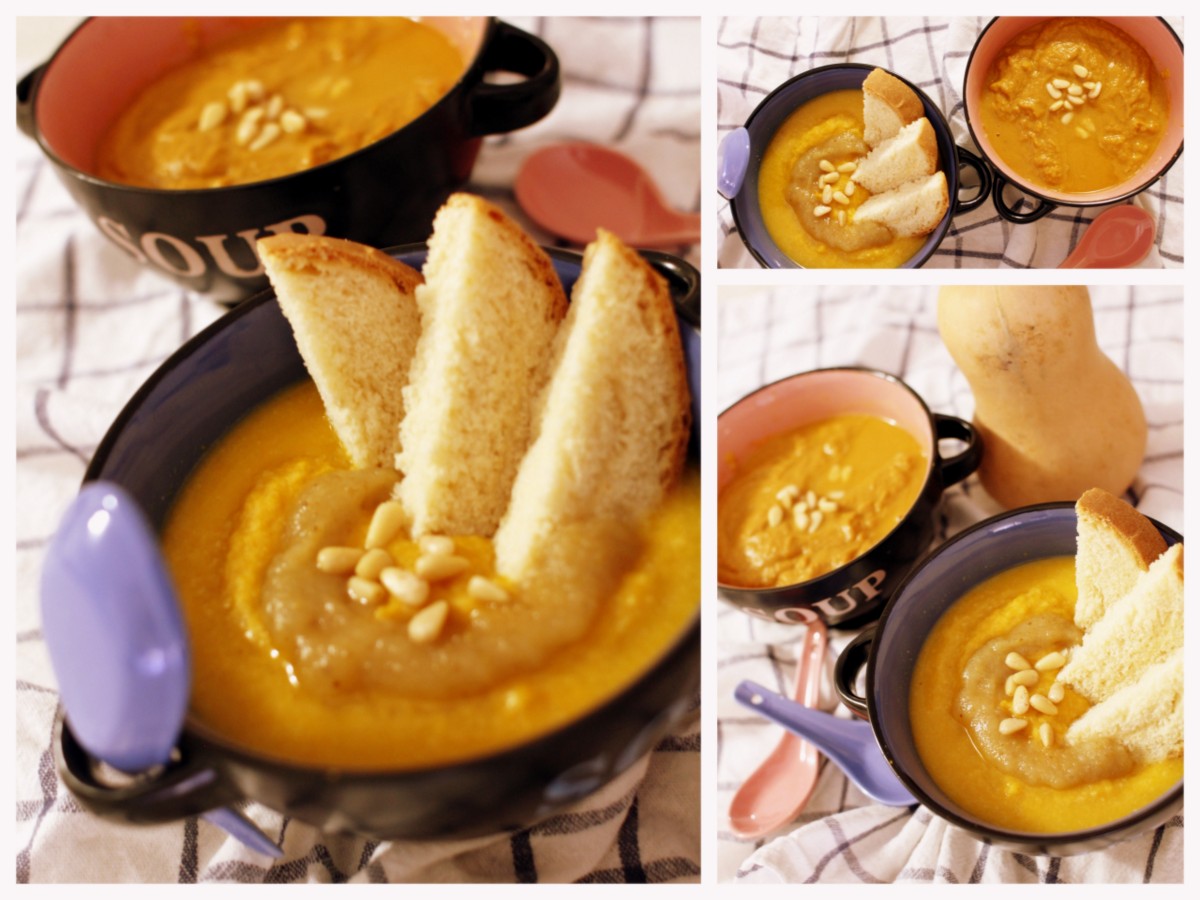
I made a pumpkin soup for lunch today using dehydrated pumpkin powder. My aunt harvested pumpkins, sliced them, dehydrated in the full autumn sun, and pounded to the powders – Yes! a long process, but it really boosts all the goodness in the pumpkins. These magic powders have full of packed nutrients; an antioxidant beta-carotene that fights against cancer, a provitamin for vit A, that is good for your eyes,  vit C for immune system and skin, a great source of fibre, potassium and zinc. I love using pumpkin in my cooking since it is so versatile. Great for soup, roasted pumpkin salad, stuffed pumpkin, stir-fry, etc.

I put two heap tablespoons of pumpkin powder, vegetable stock and handful of pine nuts in the small pot. Boil for about 5-10 mins in medium heat until it is cooked, then blended with a stick blender until you get an ideal smooth consistency. I like mine to have a bit of chunky bits and spicy, so blended about half way and added some cayenne pepper. It was so warmly and filling!

Summer Salads

Lunch6

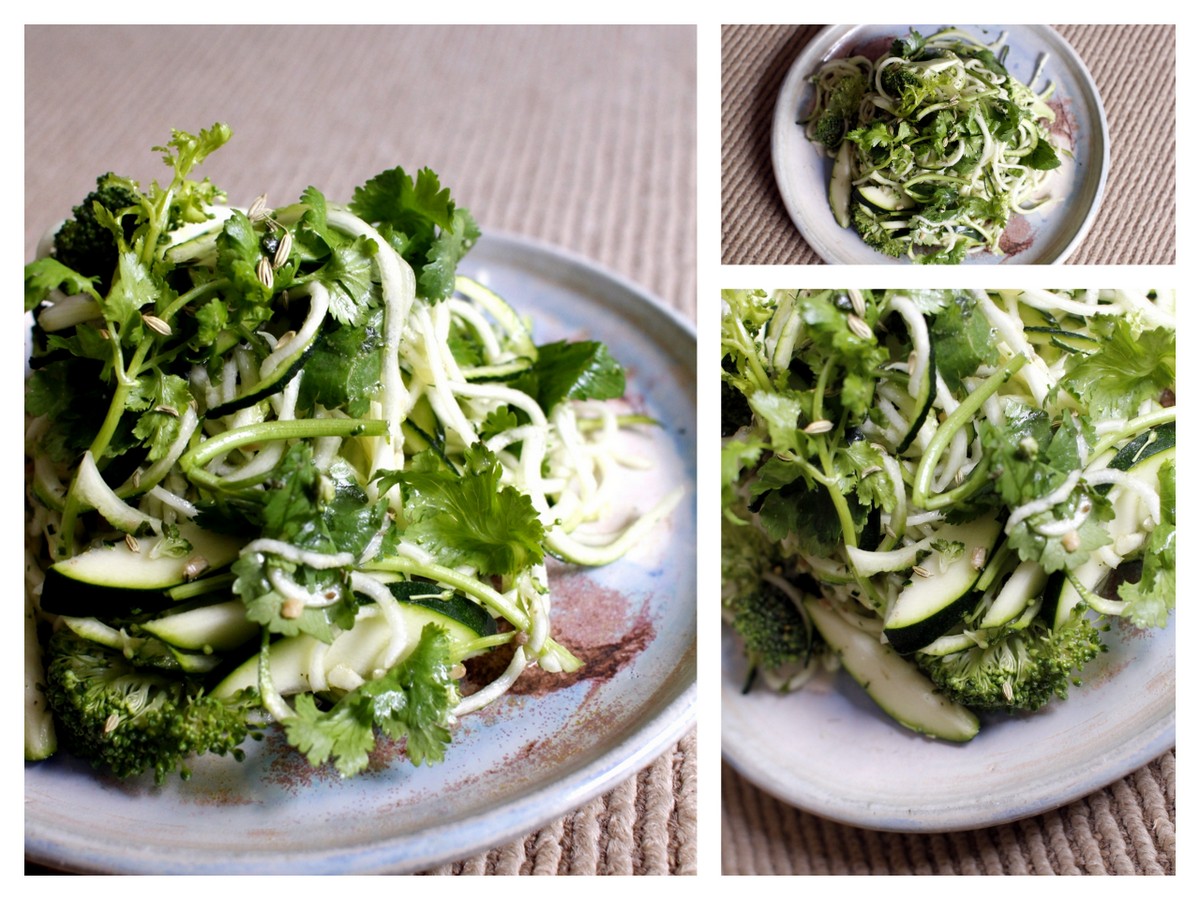
I recently bought a veggie spiraliser on-line, which is great for making “pasta” (zucchini pasta here). I decided to use it today and felt like making lots of salads, so went down to the local market to get some fruits and veggies. Getting close to Christmas (nothing opens over holiday here..boo hoo!) everyone is mad shopping to stock up all the foods they need for a few days. I just realised all morning is gone shopping, making salads and cleaning up the mess that I created in the kitchen. I wish I could concentrate on reading and studying as much as I do on cooking 🙂

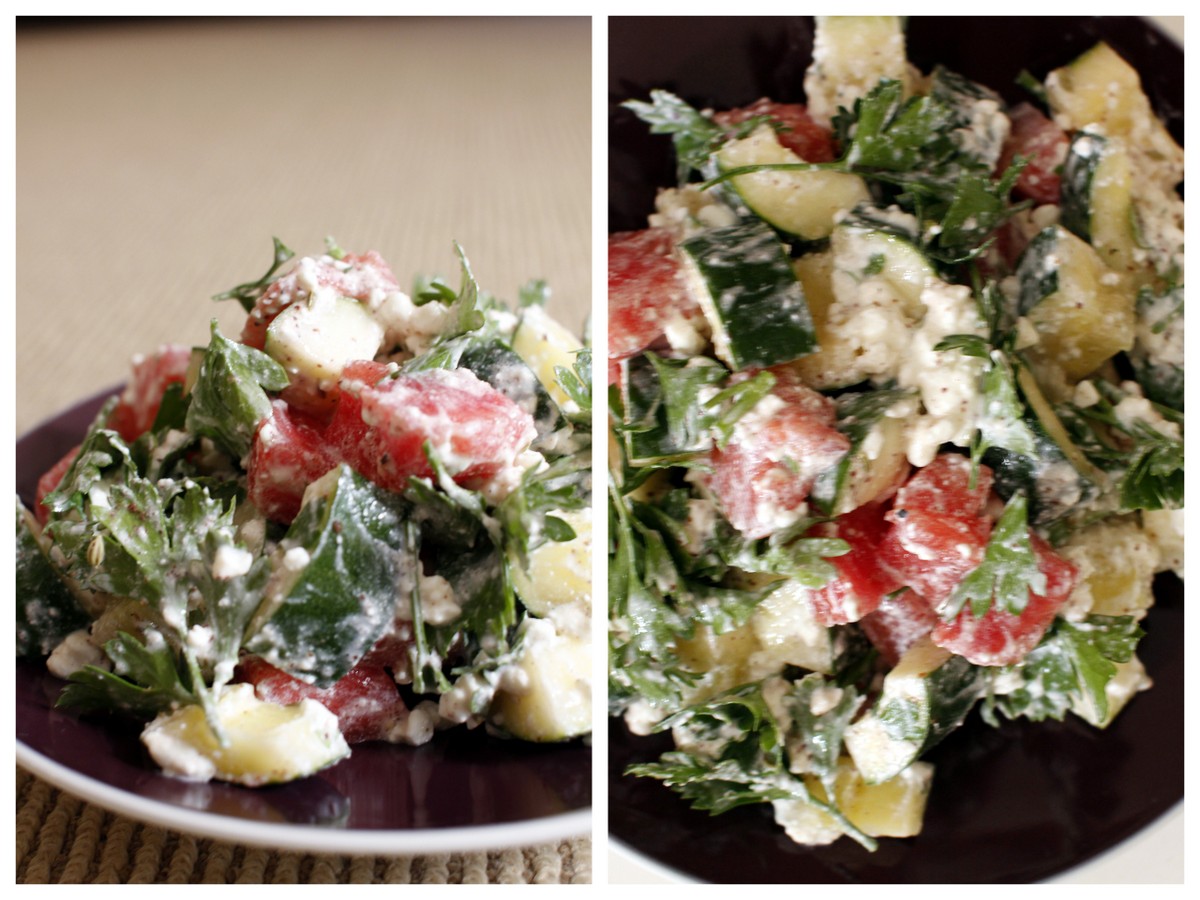
Anyhow after spending hours in the kitchen, I ended up making about four different salads for the weekend, which are zucchini pasta salad (photo above), roasted beetroot and pumpkin salad, potato and green bean salad, and lastly watermelon and cucumber salad with cottage cheese (photo below). I like keeping it simple. So dressing for all salads pretty much consists of apple cider vinegar, dijon mustard, mustard seeds, pepper, and extra-virgin olive oil. Simple dressing like this not only has low calories but also doesn’t ruin the original taste and vibrant colours of the veggies. Just the way I like it!

I might take some of these down to the park on the weekend for a little picnic since the weather is so great here, only about 30 degrees. Despite a good weather, I’m dying to have winter Christmas with lots of snow! Ah..homesick again. I hope everyone has a safe, healthy and happy holiday.

Lunch7