Raw Rainbow Chard Wraps

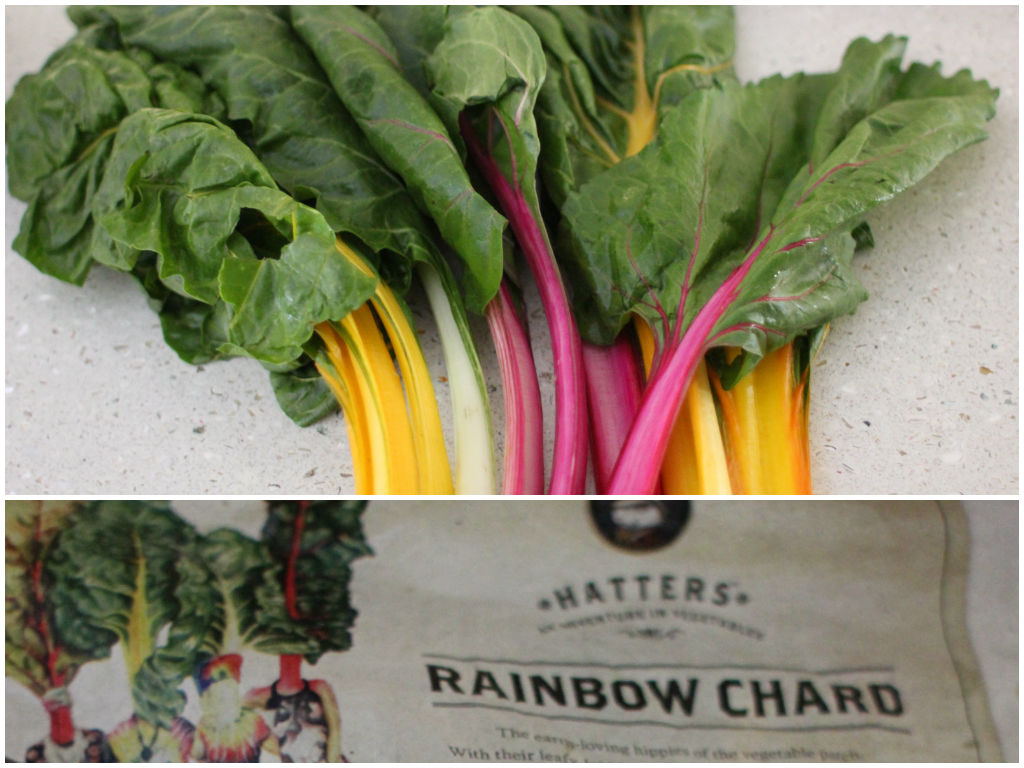
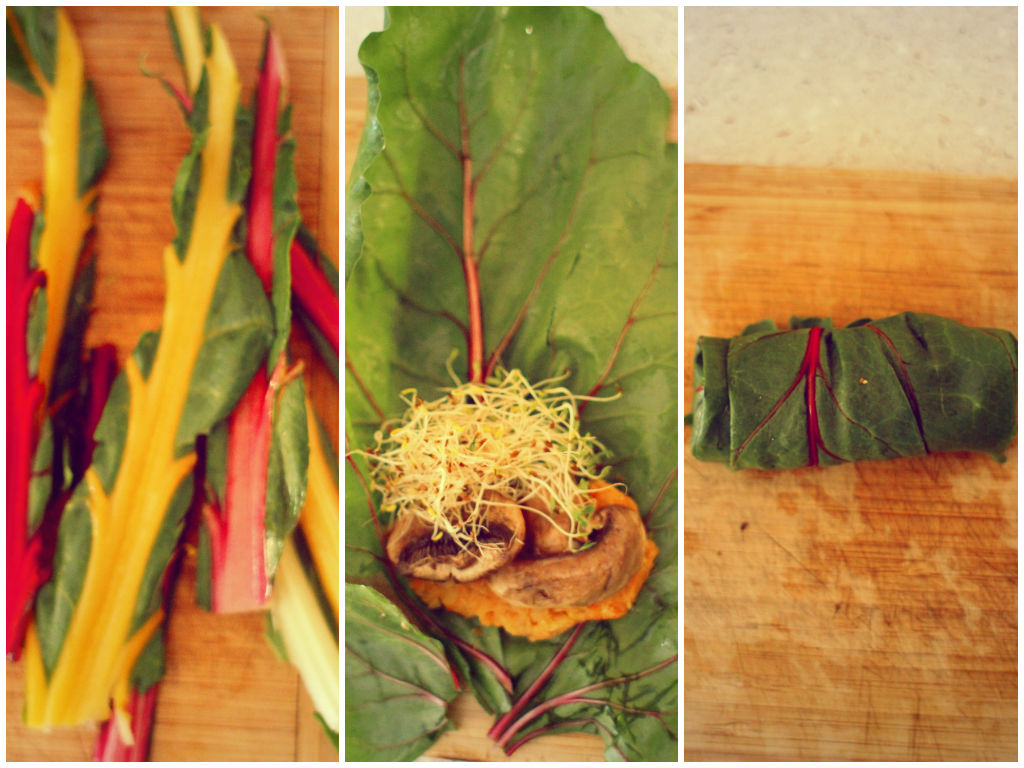
rainbow chardHow beautiful does this rainbow chard look? I’m in love with these bright yellow, red, orange and purple stalks in a bunch. The first time I used it was when mum and I were flying over to America for holiday. Since I don’t like any food from the plane, I packed raw chard wraps with some rice, veggies and chicken inside. She was surprised how it tasted so yummy and what a great idea of eating more greens in your diet. Because chard leaves are quite large and flat, it is perfect to make raw vegan wraps. They are also a great addition to your soup, stir-fry and salads.

Nutritionally, rainbow chard has an excellent source of dietary fibre, vitamin A and K, iron and phytochemicals. You can increase the amount of iron you absorb from rainbow chard by combining it with a rich source of vitamin C such as tomatoes, carrots and oranges. Chard is also a rich source of polyphenols, antioxidant compounds that may help lower your risk of heart disease, cancer, diabetes, osteoporosis and degenerative neurological conditions such as Alzheimer’s disease. It is also rich source of minerals like copper, calcium, sodium, potassium, manganese and phosphorus.
raw wrapsIngredients

8 rainbow chard leaves, washed and trimmed
100g dried chickpeas, soaked overnight
1/2 tsp minced garlic
zest and juice from one lemon
salt and pepper to taste
1/2 cup alfalfa sprouts
1 cup button mushrooms
2 tbsp coconut amino sauce or tamari

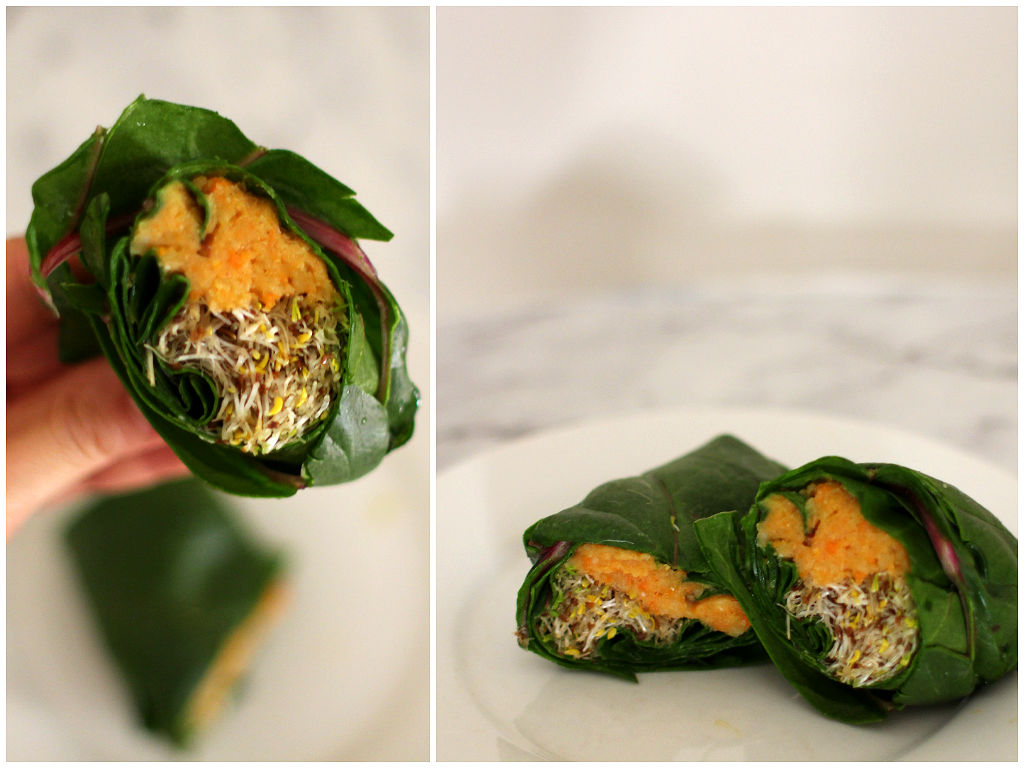
To make hummus, cook chickpeas in a boiling water for 20-30 minutes or until soft. Drain and put in your food processor along with garlic, lemon zest and juice, salt and pepper. Blend until smooth. Add a bit of water if too thick. Transfer to a bowl and set aside. Marinade thinly sliced mushrooms in coconut amino sauce for 10-20 minutes. In the mean time, wash and trim the rainbow chard leaves. Remove tough stems by cutting reverse V-shape in the middle. To assemble, place the rainbow chard leave inside facing up, put a tablespoon of hummus, a couple of mushrooms and alfalfa sprouts on top. Tuck each side in and roll up to make a wrap. Repeat with the rest of the leaves.
raw wraps1

Wild Rice Salad with Avocado and Basil Pesto

wild rice saladCalcium is quite often lacking in my diet since I don’t have dairy products in my diet. The recommended daily intake of calcium is 1000mg for men and women aged 19-50. It’s also important to note that an adequate intake of vitamin D is essential for proper calcium absorption. So if you are on a plant-based diet, you need to pay extra-attention to a balanced diet to make sure you get a daily recommended calcium. Include foods naturally containing calcium such as kale (1/2cup : 90mg), chickpeas (1/2cup : 40mg), almonds (1/4cup : 79-115mg), figs (5figs : 88-137mg). orange (1 orange : 52mg), molasses (1tbsp : 176mg). Few foods naturally contain vitamin D. For sufficient vitamin D absorption, just 10-45 minutes of unprotected sun exposure to the face and arms can provide enough pre-vitamin D to be converted to vitamin D.

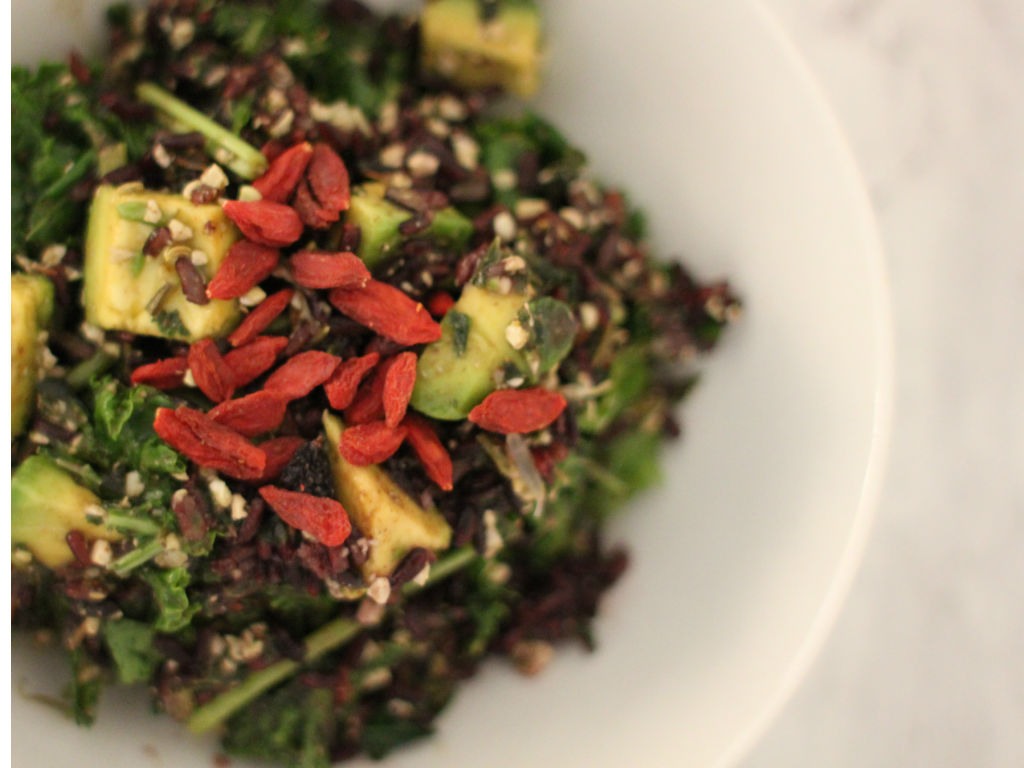
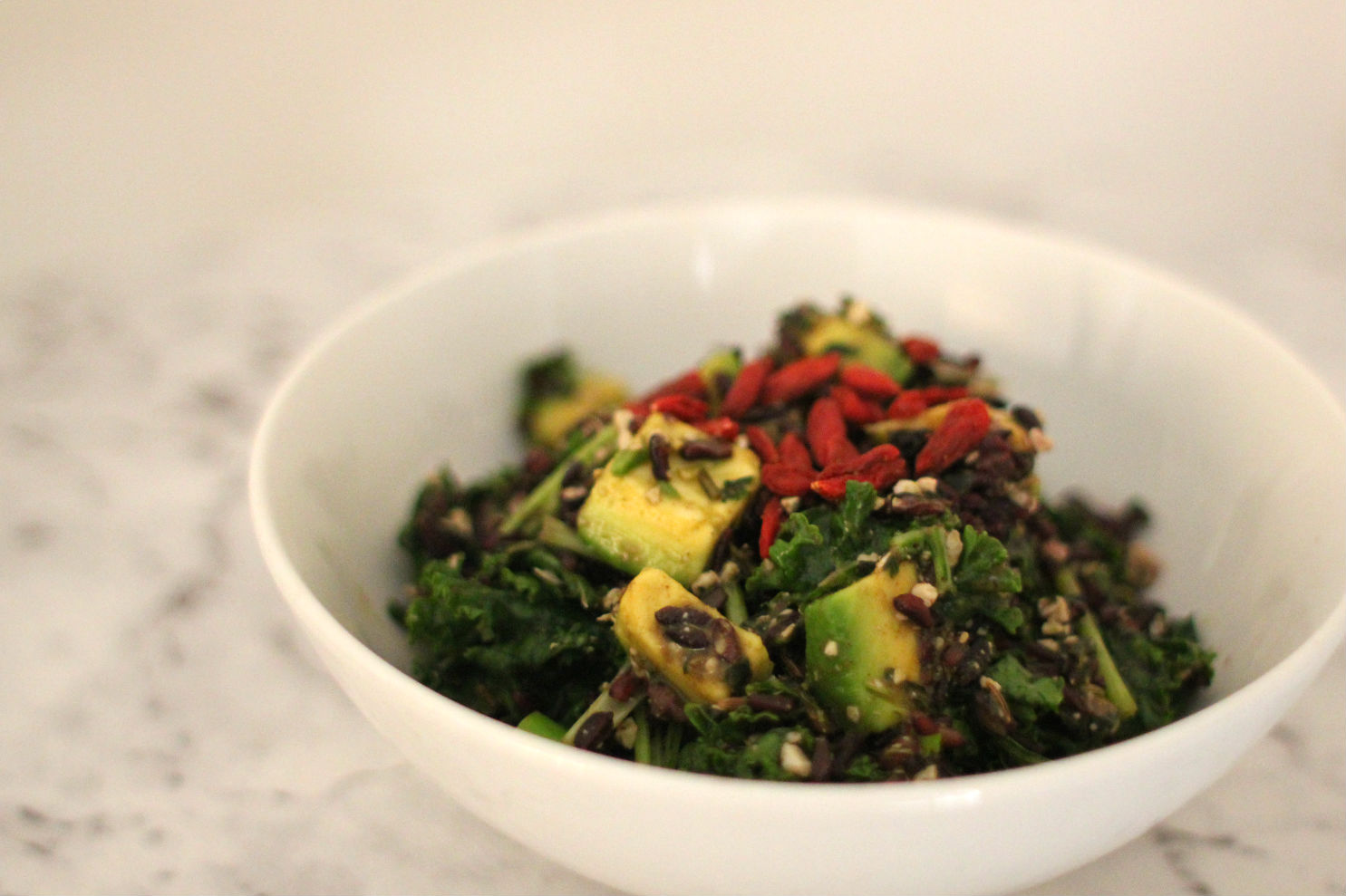
The base of this salad is kale and wild rice and I also included molasses in the dressing for extra calcium. It is such a beautiful salad – nuttiness of the wild rice, creamy avocado, yummy pesto, sweet goji berries and crunchy buckwheat groats. Maybe take this salad to the park and enjoy in the sun for vitamin D, as well 🙂
wild rice salad1Ingredients

1 cup of cooked wild rice
2 tbsp of basil-pine nut pesto
1/2 avocado
1 bunch of chopped kale leaves
1 bunch of coriander
1 tsp goji berries
1 tsp buckwheat groats

For dressing
1 tsp molasses
1 tsp of Himalayan salt
1 tsp of e.v.o.o
1 tsp of coconut vinegar
a squeeze of lemon
pepper to taste

Cook the wild rice and set aside to cool. Cut the avocado into little cubes. For basil pine nut pesto, blend 1 cup of basil leaves, 50g of toasted pine nuts, 1/2 tsp of minced garlic, 1/4 cup of olive oil and a pinch of salt in your food processor. When all ingredients are ready, mix wild rice, kale and pesto in a large bowl with half of the vinaigrette in a large bowl. Add avocados and gently toss to combine. Transfer to a serving plate and drizzle the rest of the vinaigrette. Garnish with goji berries and buckwheat groats.

Parsley Gremolata

parsleyI love the taste of parley – vibrant, clean and fresh! This green is highly nutritious, full of vitamin C and K. Vitamin K is often missing from conventional diet yet very important for normal blood clotting and healthy bones. Cruciferous vegetables like kale, broccoli, asparagus and spinach have a good amount of vitamin K as well as anticancer components. It is also an excellent source of iron. Iron deficiency is very common these days. It is actually quite hard to meet a daily dose if you don’t consciously eat the right food. Feeling dizzy, tired, short of breaths, leg pains and headaches are all the symptoms of anemia. Adults need 8gm/day for men and 18mg/day for women. For the best plant source of iron, parsley is on the top of the list. You can affect an absorb-ability of iron by combining foods. For example, meat/poultry/fish, fruits containing vitamin C (orange, strawberries, grapefruit), some veggies (broccoli, tomato, potato) and white wine enhances iron absorption. However, red wine, coffee, tea, some veggies (spinach, chard, beet greens, sweet potato – oxalic acids in these veggies bind with iron in our body), whole grains and bran, and soy products inhibits iron absorption. So try to pair iron-rich foods with iron-absorption enhancers, for example this parsley gremolata on a grilled fish and broccoli-orange salad on the side. Your energy will be supercharged.

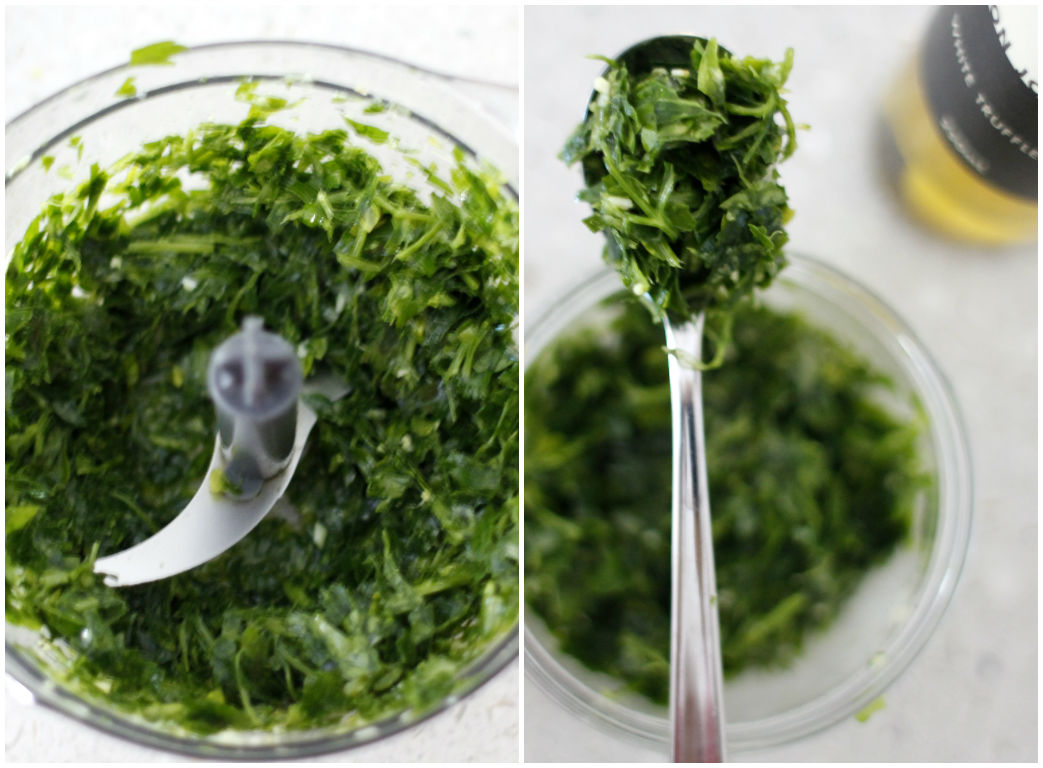
What is the better way to use parsley. Gremolata is a mixture of mixed parsley, lemon zest, garlic and olive oil, very popular in the Mediterranean. It is beautiful as salad, on grilled protein or in your soup. It is so versatile to use and really brightens up the dish.
parsley gremolataIngredients

1 cup of flat leaf parsley
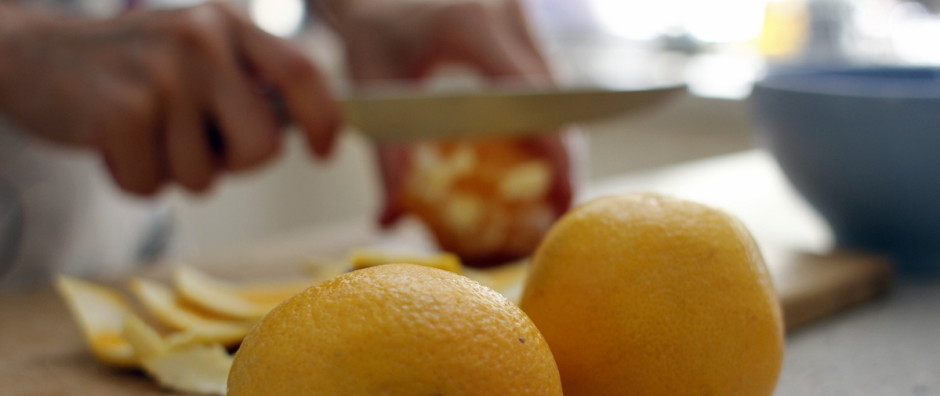
1 lemon zest and juice
1 tsp minced garlic
e.v.o.o

Combine all ingredients except oil in a food processor and turn on. Add the olive oil a little bit at a time until a thick paste is formed. The amount of oil depends on what consistency you like. Keep refrigerated in an airtight container for a week.

Kimchi Fried Cauliflower Rice

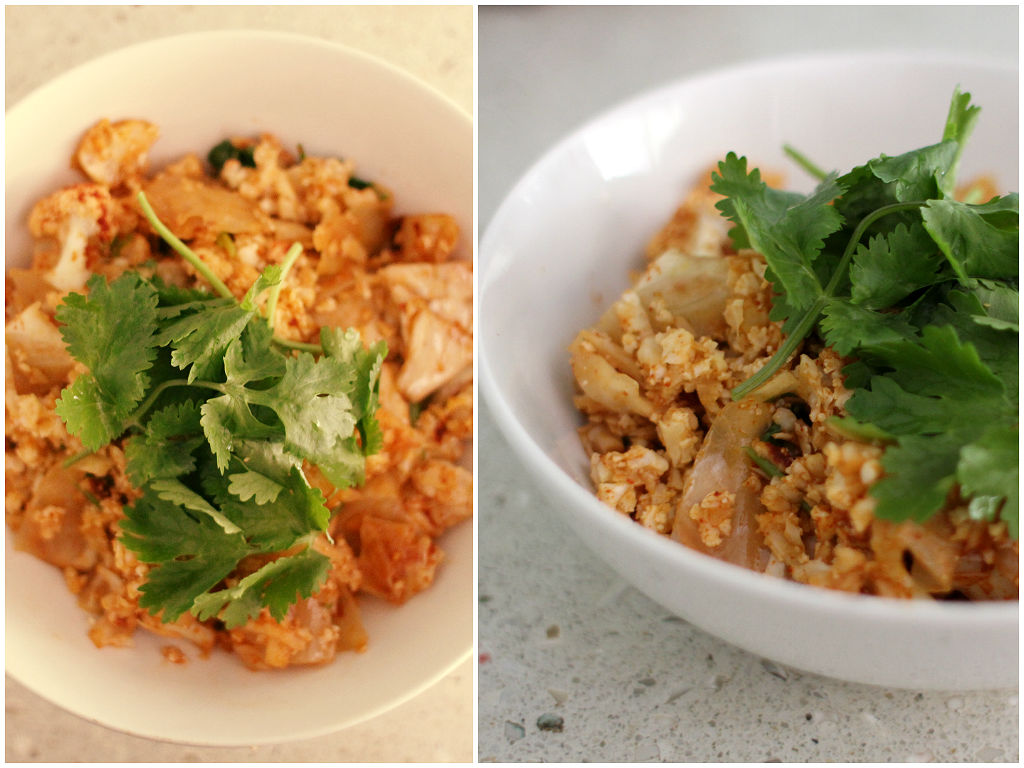
kimchi fried riceTraditionally, Korean Kimchi fried rice is made of leftovers that you have in your fridge – some cooked white/brown rice, Kimchi, spring onion, eggs, sesame oil and nori sheet. You only need simple ingredients and it is super easy and quick to make. The hero of this dish is Kimchi. Home-made ones are better and it should be fermented enough to flavour the rice. I’m adding more chili to add a bit of kick and replacing a boring humble rice with an awesome cauliflower “rice” for a nutritional boost.
kimchi fried rice1Ingredients

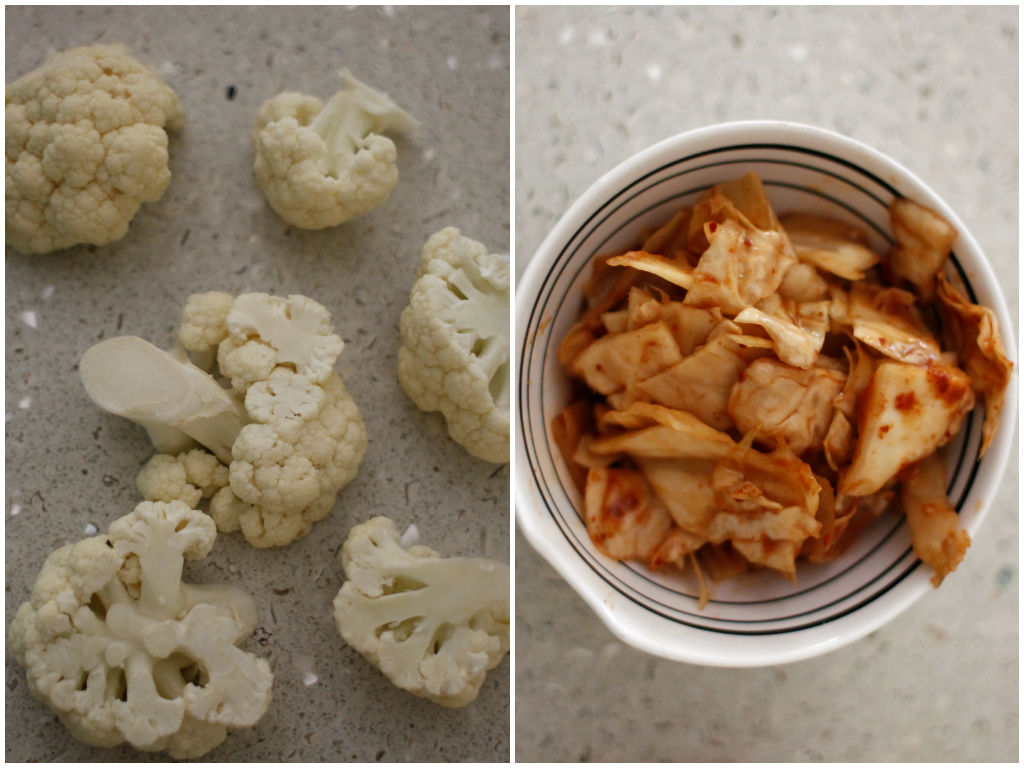
2 cups of grated cauliflower florets
1 cup of Kimchi
1 tsp of smoked paprika
1/2 tsp of chili flakes
1 tbsp of sesame oil
1 tsp sesame seeds
a bunch of coriander

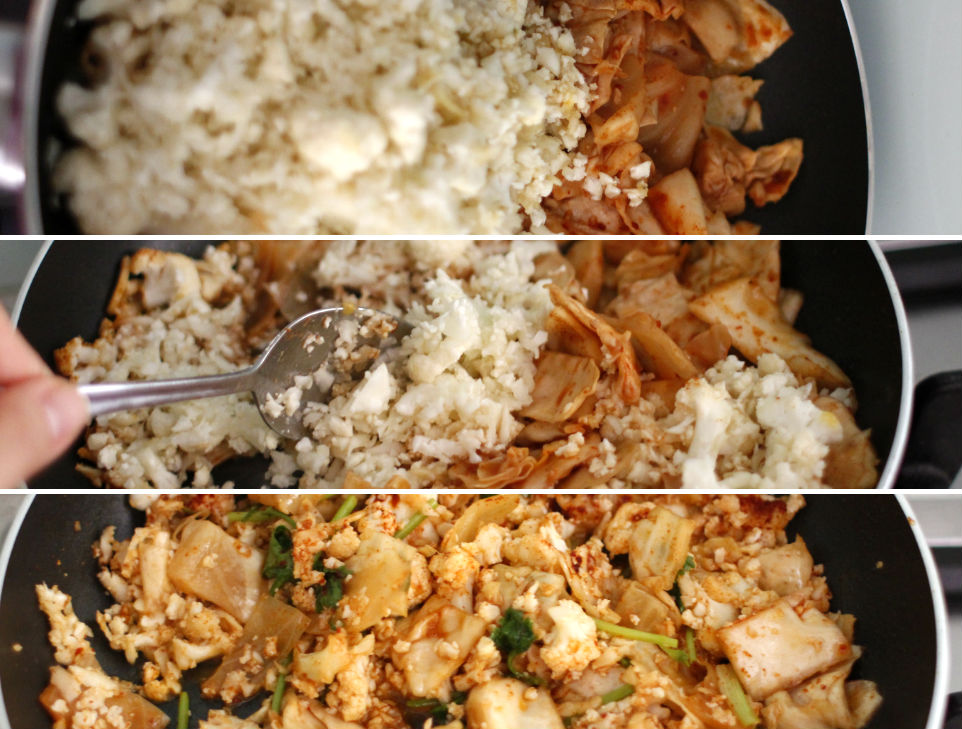
Heat sesame oil in a large pan over medium heat. Add cauliflower “rice” and Kimchi into a pan along with paprika, chili flakes and sesame seeds. Keep stirring for a couple of minutes until all ingredients are combined. Take it off the heat and add roughly chopped coriander. Transfer to a serving bowl and top with coriander leaves. Voila! Done in two minutes. You can also add a fried egg on top to cut down the spiciness and also boost protein if you like.
kimchi fried rice2

Bone Broth Soup

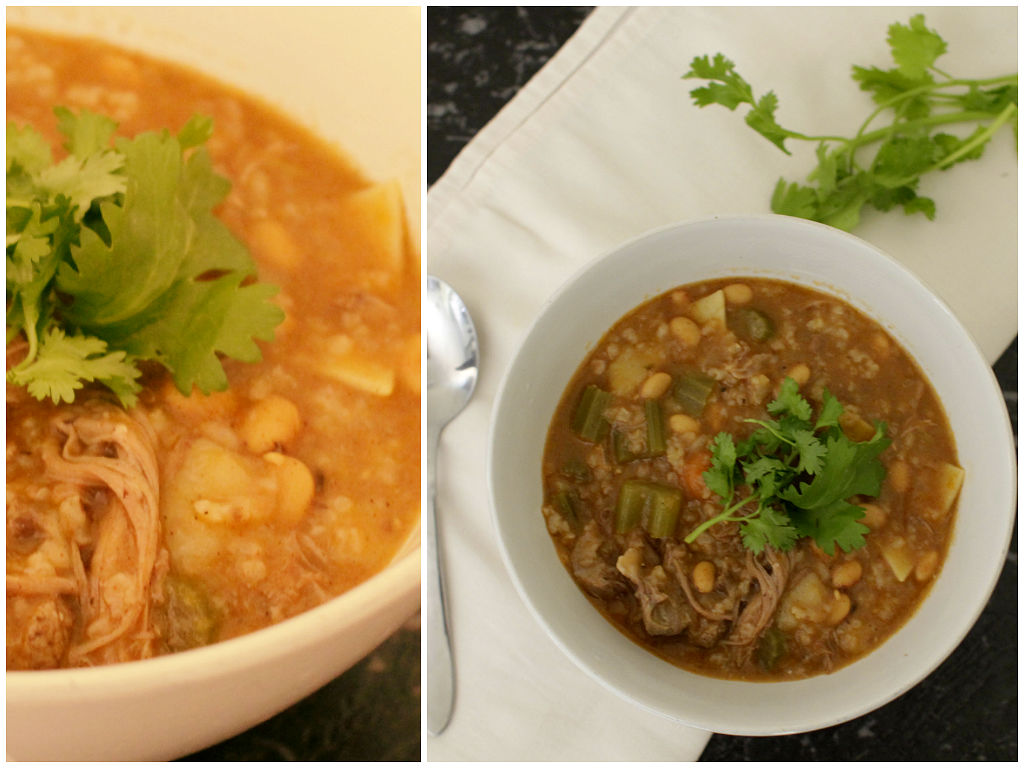
It’s that time of the year when you can make a big batch of heart-warming and comforting soup. Especially making bone broth soup is so rewarding experience for me. My mum used to do it for our family every winter when I was little. It takes so much care and love into that soup and the whole house smells like bone broth soup for days. Bones are inexpensive and in fact more nutritious than the meat. Adding something acidic like apple cider vinegar when you boil the bones helps to leach all the minerals and other nutrients from the bones. It is seriously simple to make and cannot be compared with a store-bought stock in terms of the depth of the flavour and nutrition. Good thing is you can freeze the stock in ice cube trays and keep in the freezer for months for later use.

Health benefits of bone broths are..

1. good for your digestion and gut health
2. rich in minerals like calcium, magnesium, potassium, phosphorus, sulfur and fluoride
3. rich in gelatin and collagen helps to promote bone and joint healing
4. protein in bone broths is easily digestible
5. vitamins and minerals supports the immune system
6. gelatin and collagen is good for a digestion as well as healthy nails, hair and skin
Bone Broth SoupIngredients

1 kg of lamb bones
1 onion
5 cloves of garlic
1 carrot
2 stalks of celery
2 potatoes
1/2 cup of soybeans, soaked overnight
1/2 cup of rice
3 bay leaves
1 star anise
1 tsp of all spice
1 tbsp of tomato paste
1 tbsp of olive oil
1 tbsp of apple cider vinegar
1/2 cup of cooking wine
1 liter of water
salt and pepper
coriander for garnish

Clean the bones thoroughly in cold water. Heat olive oil in a large stockpot over medium-high heat. Brown the bones for 2-3 minutes each side, take them out and set aside. Add vegetables into the same pot and cook until golden outside. Add cooking wine to deglaze the pot and then add tomato paste, all spice, water, bay leaves, star anise and vinegar. Put the bones back in the pot. Water should be enough to cover the bones. Bring it up to a rapid boil and then simmer on low heat for 3-4 hours. Add soybeans and rice in the last hour and season with salt and pepper. Once the beans and rice is cooked, turn off the heat and remove the bones, bay leaves and star anise. Take all meat and bone marrow off the bones (wear gloves). Cool down the soup so that you can skim off the fat. Put the meat and bone marrow back into the soup and heat it up again. Serve with fresh coriander.